
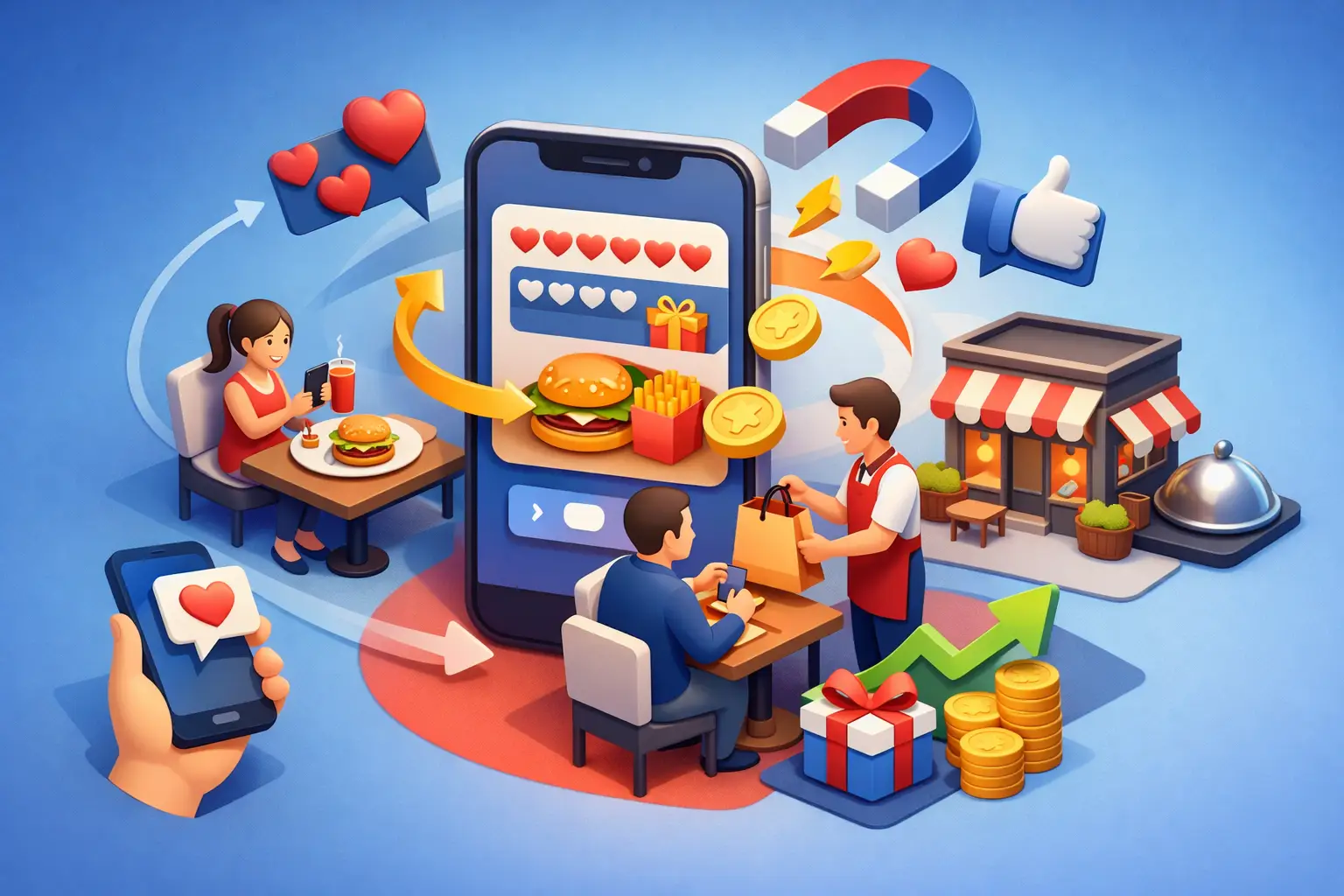
The customer who visits every Friday is worth more than a one-off busy Saturday. Yet many restaurants still rely on a paper stamp card that gets lost in a wallet, forgotten at home or never brought out at the till. A restaurant customer loyalty app gives regulars a reason to return while giving your business a practical way to stay in touch after they leave.
For independent restaurants, takeaways and growing local groups, loyalty does not need to mean complicated points tables or expensive CRM projects. The best approach is familiar: customers earn stamps, see their progress and receive a reward they genuinely want. The difference is that it lives on their mobile phone, where it is far less likely to be misplaced.
Why repeat visits matter more than another discount
Winning new customers takes time, staff effort and marketing spend. Encouraging an existing guest to come back is usually the faster route to more consistent revenue. They already know your menu, location and service. A well-timed reward can be the nudge that turns an occasional visitor into part of your weekly trade.
This is where digital loyalty earns its place. Rather than offering blanket discounts to everyone, you reward customers for behaviour that benefits the business: repeat visits, regular orders or choosing your restaurant when they are deciding where to eat. A free side after several purchases, a complimentary main course after a set number of visits, or bonus stamps during quieter periods can feel generous without cutting into every transaction.
The value is not only the reward itself. It is the visible progress. When a customer has already collected seven stamps towards a reward, they have a clear reason to choose you again. Paper cards can do this too, but an app makes participation easier and gives your restaurant a direct communication channel that paper simply cannot provide.
What a restaurant customer loyalty app should do
A restaurant customer loyalty app should be simple for both sides of the counter. Customers should be able to hold a digital loyalty card on their mobile phone, collect stamps quickly and understand exactly what reward they are working towards. Staff should be able to issue stamps in seconds, without interrupting the queue or needing technical training.
QR-code scanning is especially useful in busy service periods. The customer presents their unique code, a team member scans it and the stamp is added straight away. There is no manual counting, no arguments about whether a card was stamped, and no need for staff to carry a pile of paper cards behind the till.
For the business, the stronger platforms go beyond a digital version of a punch card. They let you create a card that matches your brand, set the number of stamps required, decide what the reward should be and adjust offers as your trading needs change. This matters because a city-centre lunch spot, a family restaurant and a neighbourhood takeaway will not have the same customer habits.
Direct marketing is the other major advantage. Once customers have chosen to engage with your loyalty programme, you can send them relevant updates, images, videos, special offers and bonus-stamp campaigns. That could mean promoting a new lunch menu, filling quieter Tuesday evenings or letting regulars know about a seasonal dish. The message reaches people who already know your restaurant, rather than an audience that has never ordered from you.
Start with a reward people can understand
The most effective loyalty schemes are easy to explain in one sentence. “Collect nine stamps and get your tenth coffee free” works because customers immediately understand the goal. Restaurants can use the same thinking: “Collect six stamps and receive a free starter” or “Order eight times and enjoy £10 off your next meal.”
Keep the reward attractive enough to motivate a return, but commercially sensible. A high-margin item, a quieter-day incentive or an upgrade can often work better than giving away your most expensive dish. If your average customer visits once a month, a 10-stamp reward may take too long to feel achievable. If they visit weekly, it may be exactly right. The right number depends on your average order value, visit frequency and margin.
It also helps to match the reward to the customer journey. A quick-service venue might reward several smaller purchases. A destination restaurant with less frequent visits may be better suited to a birthday treat, early access to an event or a reward after fewer, higher-value visits. There is no single perfect structure. The aim is to make returning feel worthwhile without training customers to wait for discounts.
Make joining effortless
Customers are unlikely to fill in a lengthy form while they are choosing their meal or waiting for a takeaway. Introduce the programme at natural moments: at payment, on table displays, at the collection point or on a receipt. Staff only need a short, confident line such as: “Would you like to collect a digital stamp towards a reward?”
The first interaction sets the tone. If joining takes seconds and the first stamp is issued immediately, customers see the benefit straight away. If it feels like another account to manage, they may decline. Clear signage and a small staff prompt can make a significant difference to sign-up rates.
Turn loyalty data into useful restaurant marketing
A loyalty app is most valuable when it helps you act on customer behaviour. You do not need a complicated marketing calendar. You need timely reasons for regulars to return.
A bonus-stamp campaign is a good example. If Wednesday evenings are consistently quieter, offer double stamps to loyalty members who visit that night. You are not reducing prices across the board. You are encouraging your existing audience to change their timing, while protecting the value of your normal menu.
Rich-media messages can also make offers more appealing than plain text alone. A strong image of a new dish, a short video of a limited-time special or a simple reminder about a weekend menu gives customers a reason to pay attention. Keep messages relevant and purposeful. Too many promotions can make your restaurant feel noisy and encourage customers to switch off notifications.
Segmenting is useful when your customer base grows, but it does not have to be overcomplicated. Start by thinking about what different groups need. New members may benefit from a welcome offer. Customers close to a reward may need a gentle reminder. Regular lunch customers may respond to a weekday special, while evening diners may care more about a new menu or event. The more relevant the message, the better the chance of a visit.
Give staff a process they will actually use
A loyalty programme only works when stamps are issued consistently. If one staff member mentions it and another forgets, customers lose confidence and the scheme fails to build momentum. Make loyalty part of the normal payment routine, not an optional extra to remember when the queue is quiet.
Training should be practical. Show staff how to scan the code, issue a stamp and explain the reward in plain language. Give them an answer for the most common question: “How many stamps do I need?” A quick demonstration before a shift is often more useful than a long manual.
Managers should also check that rewards are being redeemed properly and that team members know how to handle a customer who has a question. The goal is not to create more admin. It is to make every customer interaction more likely to lead to a future visit.
Measure what is changing
The best loyalty programmes make performance easier to see. Track how many customers join, how often they collect stamps, how many rewards are redeemed and whether bonus campaigns increase visits during the periods you want to improve.
Do not judge a scheme only by the number of rewards given away. Redemptions are a positive sign when they are linked to repeat spending. A customer who earns a free item after several paid visits is showing exactly the behaviour the programme was designed to encourage.
It is also worth reviewing your offer after the first few months. If customers collect stamps but never redeem, the target may be too distant or poorly communicated. If rewards are redeemed very quickly without enough additional spend, reconsider the threshold or reward type. Small adjustments can protect margins while keeping the programme motivating.
Avoid the common loyalty mistakes
The biggest mistake is making the scheme hard to understand. Avoid confusing exclusions, changing rules too often or rewards that sound better than they are. Customers should know what they are earning and trust that they can claim it.
Another mistake is treating every customer the same. A generic discount sent repeatedly may produce short-term sales, but it does little to build a relationship. Use your loyalty programme to reward genuine engagement and communicate with purpose.
Finally, do not choose technology that creates work for your team. If staff need multiple logins, complicated equipment or lengthy training, adoption will suffer. Platforms such as Loyalty Magnet are designed to keep the process mobile-first: create your branded card, issue stamps by QR code and communicate with the customers who have already chosen your business.
A good loyalty programme should feel like a small, welcome extra for the customer and a dependable sales tool for the restaurant. Start with one clear reward, make every stamp easy to collect, then use thoughtful messages to give regulars a reason to return this week rather than sometime later.