
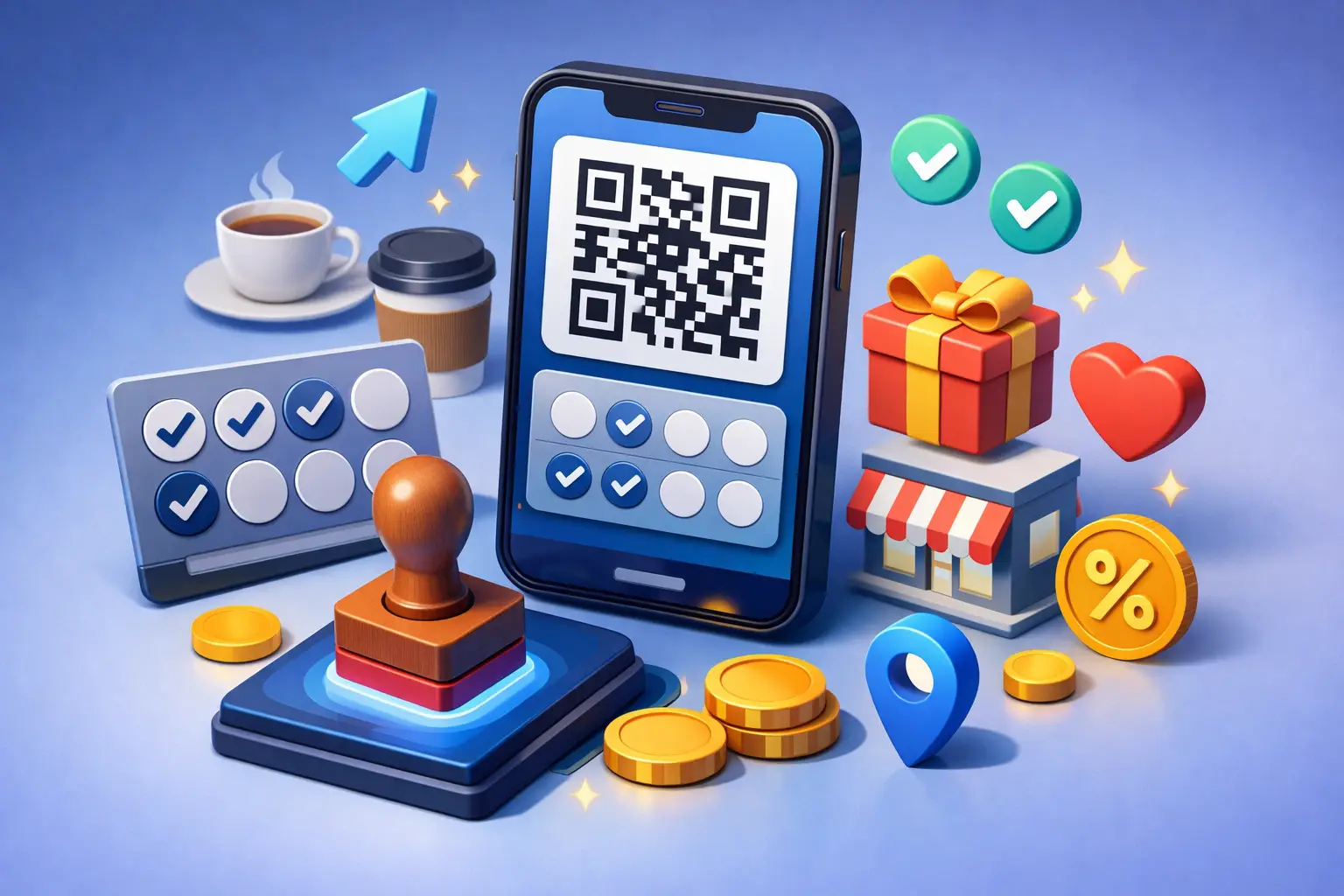
A paper stamp card usually fails at the worst possible moment: when a regular customer reaches the till, realises it is in another coat or purse, and leaves without the stamp that would bring them back. A QR code stamp card app removes that small but costly friction. Customers keep their card on their phone, staff issue a stamp with a quick scan, and your business has a practical way to reward repeat visits and stay in touch.
For cafés, salons, gyms, restaurants and local retailers, the appeal is simple. You do not need a complicated CRM project or a technical team. You need a loyalty programme that customers understand immediately, staff can use during a busy shift, and managers can measure against real commercial goals.
Why a QR code stamp card app works better than paper
Paper stamp cards are familiar, but familiarity is not the same as effectiveness. They get lost, damaged and forgotten. They offer almost no visibility into how often customers return, which reward motivates them, or whether a promotion has changed buying behaviour.
A digital card keeps the familiar collect-and-reward experience while making it easier to use. The customer presents their unique QR code, a member of staff scans it, and the stamp is added to their digital card. There is no handwriting to decipher, no stack of printed cards to reorder, and no debate over whether a half-completed card was genuine.
That speed matters. If issuing a stamp holds up the queue, staff will stop promoting the scheme. If joining takes too long, customers will not bother. The right app makes both actions feel like part of a normal transaction: quick, clear and consistent.
The bigger change happens after the visit. A paper card cannot remind someone about their next coffee, haircut or class. A digital loyalty programme can give participating customers relevant updates, bonus-stamp offers and news from the business they have already chosen to visit. That turns a stamp card from a passive giveaway into an active customer-retention tool.
Start with a reward customers genuinely want
A digital scheme is only as good as the reason to return. “Collect nine, get the tenth free” remains popular because it is easy to explain, but it is not the only option. A salon may offer a complimentary treatment add-on after a set number of visits. A restaurant might reward repeat lunch customers with a free side or dessert. A gym could use stamps to encourage attendance during quieter periods.
Choose a reward that feels worthwhile without giving away too much margin. This is where many businesses overcomplicate things. Customers should be able to understand the offer in seconds: what they need to do, how close they are, and what they will receive.
The number of stamps depends on the purchase cycle. A daily coffee shop can reasonably ask for more stamps than a restaurant people visit once a month. If the finish line feels too distant, the programme loses momentum. If it is too close, the reward may cost more than the extra visits it generates. Start with a sensible target, watch the results, then refine it.
A clear visual card also helps. Use your business name, logo and brand colours so the programme feels like an extension of the experience customers already enjoy. For multi-location operators, decide whether customers can collect and redeem across all sites. A shared programme can encourage customers to choose your brand wherever they are, while location-specific offers can help individual branches build local trade.
Make joining and stamping part of the routine
The best loyalty programme is mentioned naturally at the counter, not hidden in a poster by the door. Staff do not need a long sales script. A simple invitation works: “Would you like to collect digital stamps with us?” When the benefit is immediate, customers are more likely to say yes.
Training should focus on three moments: inviting new customers to join, issuing stamps accurately, and explaining how rewards are redeemed. Keep the process consistent across every shift. If one team member gives stamps without scanning while another follows a different approach, the scheme soon becomes confusing for customers and difficult to manage.
It also helps to set clear rules before launch. Decide whether customers earn stamps on every purchase or only above a minimum spend. Be specific about whether discounted items count, whether one transaction can earn more than one stamp, and whether rewards have an expiry date. These choices are not about making the programme restrictive. They protect your margins and prevent awkward conversations at the till.
With an app such as Loyalty Magnet, the business and customer journeys are kept simple: customers hold their cards on their phones, while merchants issue stamps and manage rewards from their own app. That means your team can run the programme without extra equipment or a lengthy setup process.
Use offers to bring customers back at the right time
Digital stamps encourage repeat behaviour. Targeted messages give you a way to influence when that repeat visit happens. This is particularly useful when trade is uneven.
A café might send a bonus-stamp offer on a quiet weekday afternoon. A beauty business could remind customers that it is time to rebook after a typical treatment cycle. A retailer can share a new product image with customers who already know and like the shop. These communications work best when they are timely and useful, not constant.
Think about the customer’s routine rather than sending the same message to everyone. Someone who visits every week may respond well to a reward-progress reminder. Someone who has not returned for a while may need a stronger reason, such as extra stamps on their next visit or an exclusive offer. The point is not to chase customers with endless promotions. It is to give them a relevant nudge before they choose somewhere else.
Rich-media messages can be especially effective for businesses where presentation sells. A restaurant can show a seasonal dish. A salon can share a treatment result. A fitness studio can promote a new class. Good imagery creates appetite and interest in a way that a printed stamp card never can.
Measure the behaviour behind the stamps
The value of a QR code stamp card app is not only that it digitises an old system. It gives you a clearer view of whether your loyalty activity is working.
Look beyond the total number of members. A large member count is encouraging, but repeat visits are the real test. Are customers collecting stamps regularly? How many complete the card and claim a reward? Do bonus-stamp campaigns bring people back during the period you intended? Which locations are enrolling the most customers?
These answers help you make better commercial decisions. If customers join but rarely return, the reward may be too far away or the welcome message may not be strong enough. If a bonus campaign creates a rush but no lasting uplift, it may be attracting discount seekers rather than building habits. If one branch outperforms the others, look at how its team introduces the scheme.
Use the information to improve one element at a time. Change the reward threshold, adjust the timing of an offer, or give staff a clearer joining prompt. Small changes are easier to evaluate than rebuilding the whole programme every month.
Avoid the mistakes that make loyalty feel like a chore
A digital programme should make life easier for customers and staff, not add another task to a busy day. Avoid asking customers to complete long forms just to receive one stamp. Keep the reward rules visible. Ensure the QR scan works reliably at the counter. Most importantly, make sure every member of the team believes the programme is worth mentioning.
Do not treat the loyalty card as a substitute for good service, either. A reward can encourage another visit, but friendly staff, dependable quality and a positive experience are what make customers want to return. The app supports that relationship by making recognition and communication easier.
There is also a balance to strike with promotions. Too few messages and customers may forget the programme exists. Too many and the offer loses its value. A well-timed update tied to a genuine reason to visit will usually outperform a stream of generic discounts.
Your first goal does not need to be thousands of members. Start by giving regular customers a simple reason to keep choosing you, then let each scan show you what brings them back. When loyalty is quick to join, easy to use and rewarding to complete, repeat business becomes a process you can actively grow rather than simply hope for.
Join businesses increasing repeat customers with digital loyalty cards