
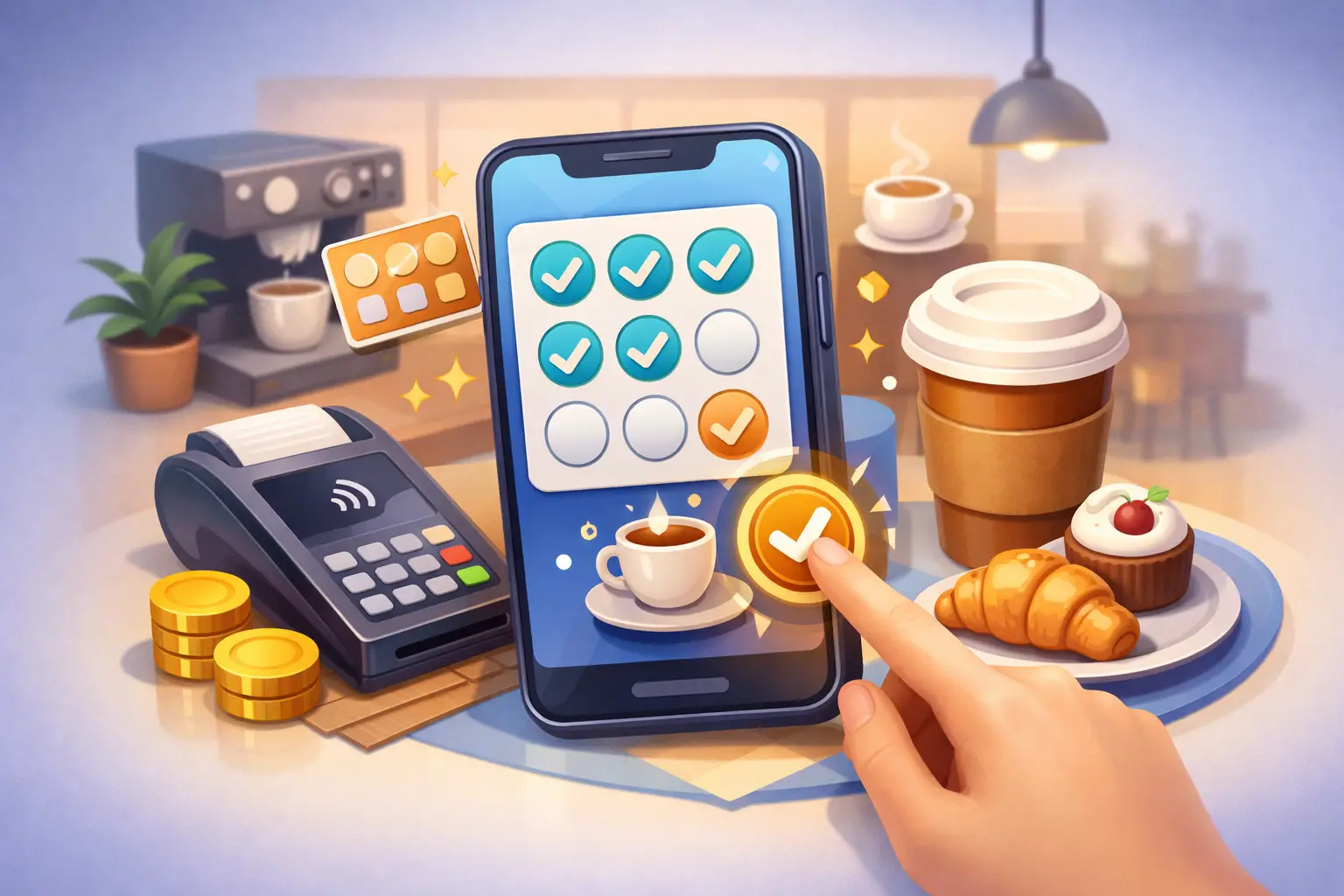
The rush between 8am and 10am is not the problem for most cafés. The challenge is turning a one-off flat white into a Tuesday, Thursday and Saturday habit. A cafe digital stamp card gives customers a reason to return while their last visit is still fresh, without asking your team to manage piles of paper cards or remember who is due a free drink.
The best schemes feel familiar: buy a set number of qualifying drinks, collect stamps and claim a reward. What changes is the experience around it. Customers keep their card on their phone, staff issue a stamp with a quick QR-code scan, and your café has a practical way to encourage the next visit.
Why paper stamp cards lose valuable repeat custom
Paper cards are simple, but they create avoidable friction. They get left in another coat, lost in a wallet or forgotten at home. A customer who has collected six of nine stamps may still choose another coffee shop if their card is not with them. Your reward has value, but it is not present at the moment of choice.
There is also very little visibility. You cannot easily see whether a promotion brought customers back, which reward is most popular, or whether regulars have stopped visiting. Most importantly, a paper card gives you no way to speak to customers between visits.
A digital card keeps the familiar loyalty mechanic but makes it easier to use. The customer has it on the device they already carry. Your staff can issue stamps consistently. When you run a quieter afternoon offer or launch a new seasonal drink, you can send it directly to people who have already chosen your café before.
That does not mean every customer will join immediately. Some people simply want to pay and leave. The goal is not to slow the queue by forcing sign-ups. It is to make joining so quick and worthwhile that regular customers see a clear benefit.
What a cafe digital stamp card should do
A useful scheme is more than a digital version of cardboard. It should reduce effort for staff, feel worthwhile for customers and give the owner a clear commercial reason to keep it running.
Make earning stamps obvious
Keep the rules easy to explain in one sentence. For example: buy nine barista-made drinks and get the tenth free. If food is a key part of your margin and proposition, you might reward any hot drink and pastry purchase instead. The right qualifying purchase depends on what you want customers to buy more often.
Avoid complicated exclusions unless they are genuinely necessary. If a customer has to ask whether oat milk, iced drinks or a large coffee count, the programme becomes harder to sell at the till. Clear rules make it easier for staff to mention it naturally: “Would you like a stamp on your digital card?”
Issue stamps quickly at the point of sale
The reward should not hold up a busy queue. A QR-code scan through a business app is faster and more reliable than manually writing dates or marking cards with a pen. It also means every member of the team follows the same process, whether you have one independent café or several locations.
Train staff on two short moments: how to invite a customer to join, and how to issue or redeem a stamp. They do not need a sales script. A simple prompt works best, especially when customers can see the reward displayed near the counter.
Keep your branding in the customer’s pocket
Your card should look like your business, not a generic points scheme. Use your café name, logo, colours and a reward that reflects what customers already enjoy buying from you. This makes the programme feel like an extension of the service rather than another app competing for attention.
For a multi-site operator, brand consistency matters even more. Customers should recognise the same card whether they visit your city-centre branch, a station kiosk or a neighbourhood café. You can decide whether stamps work across all sites or are location-specific, based on how your operation is set up.
Choose a reward that protects margin
A free coffee after a fixed number of purchases is popular because customers understand it immediately. But it is not the only option, and the cheapest reward is not always the best one.
Start with the behaviour you want to encourage. If your mornings are strong but afternoons are quiet, use a double-stamp offer after 2pm rather than giving away more drinks all day. If customers often buy coffee but not food, offer a free cake, pastry upgrade or money-off lunch reward after a set number of visits. The reward can steer purchasing behaviour as well as thank customers for it.
Look at your average transaction value, gross margin and typical visit frequency before deciding the stamp threshold. A reward after five purchases feels generous, but it may be expensive if most customers reach it quickly. A reward after twelve may protect margin but feel too distant for occasional visitors. For many cafés, eight to ten qualifying purchases is an easy starting point, then you can refine it using real customer activity.
It also helps to define redemption clearly. Can a free drink include any size and extras? Does it expire? Can customers use it alongside another offer? Being generous is good for loyalty, but ambiguity at the till creates awkward conversations for staff and customers alike.
Turn loyalty activity into useful marketing
The real advantage of digital loyalty is the conversation after a customer leaves the café. A stamp card creates a permission-based audience of people who have already shown interest in your business. That is far more useful than posting to social media and hoping the right local people see it.
Use messages with a clear reason to visit. A photo of a new cinnamon bun, an early look at a summer menu, a bonus-stamp weekend or a weekday lunchtime offer can bring your brand back to mind at the right time. Rich images and short videos work well when the product itself is visual, but the offer must still be easy to understand in seconds.
Targeting matters. A blanket discount sent every week can train customers to wait for deals and reduce the value of your regular pricing. Instead, use promotions selectively. Reward customers close to completing a card, encourage visits during traditionally quiet periods, or give regulars a small reason to try a new line.
For example, a café could run double stamps on iced drinks during a warm spell, then send a message on Friday afternoon reminding customers that the offer ends on Sunday. Another might give one bonus stamp with a new breakfast item for a limited period. These campaigns feel relevant because they connect an offer to a real purchase occasion.
Loyalty Magnet combines branded digital cards with promotional messages, images, videos and bonus-stamp campaigns, giving café owners a practical way to run both sides from mobile: reward the visit, then encourage the next one.
Set it up without making it a major project
A digital loyalty programme should be quick to launch, but take a little time to make the first version commercially sound. Decide the qualifying purchase, number of stamps, reward and any redemption conditions. Then prepare the card design and make sure every staff member knows the customer journey.
Before launch, test it yourself. Join as a customer, issue a stamp and redeem a reward. This highlights unclear wording and gives your team confidence before the first customer asks for help.
At launch, make the benefit visible. Put a simple message at the till and mention it when customers pay. Your first goal is not thousands of sign-ups. It is getting your existing regulars enrolled, because they are most likely to complete a card and prove whether the reward feels motivating.
Track a few useful measures rather than drowning in data: cards joined, stamps issued, rewards redeemed, repeat visits and results from specific campaigns. If sign-ups are low, improve how the programme is introduced. If lots of customers join but few progress, check whether staff are consistently issuing stamps. If redemptions are high but spend is not improving, adjust the reward or use offers that encourage an additional purchase.
Common mistakes that make loyalty less effective
The biggest mistake is treating the card as a one-off launch project. A loyalty scheme needs occasional attention. Review the reward, celebrate seasonal products and use messages when there is a genuine reason for customers to return.
Another mistake is making the reward too difficult to reach. Your regulars should feel progress. If the finish line looks distant, a stamp card becomes background noise. Equally, do not make the offer so generous that it becomes hard to sustain when participation grows.
Finally, do not rely on discounts alone. Customers return to cafés for good coffee, friendly service, convenience and a sense of familiarity. The card supports those strengths. It cannot fix inconsistent quality or a poor queue experience, but it can give satisfied customers a useful nudge to choose you again.
A well-run cafe digital stamp card is a small daily habit with a bigger commercial effect. Each scan says that a customer came back. Each reward gives them a reason to do it again. Keep the experience quick, the reward believable and your messages relevant, and loyalty starts to feel less like marketing and more like good hospitality.