
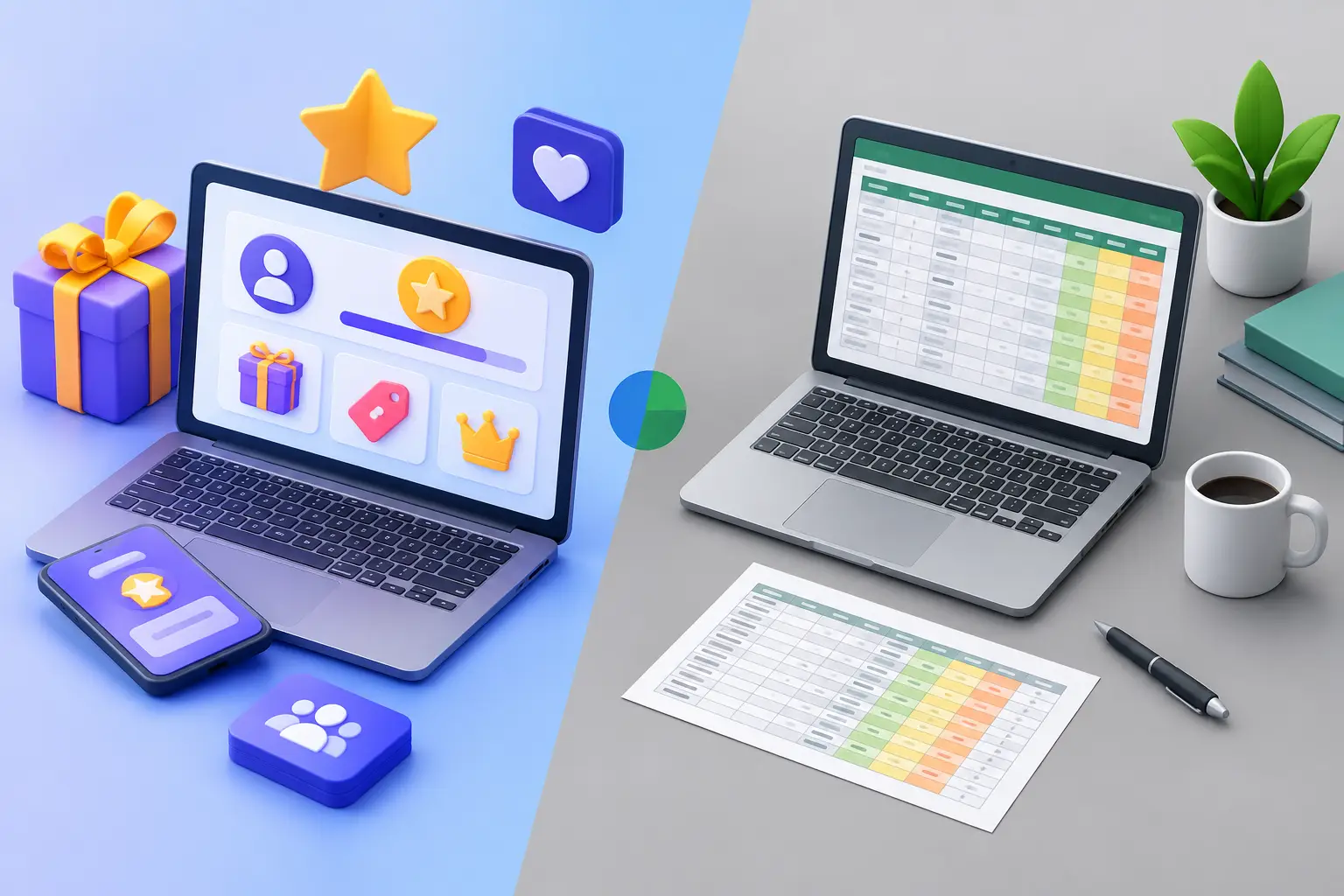
A customer comes back for a sixth coffee, haircut or gym session. Your team knows they are a regular, but can they see how close they are to a reward, thank them properly or send an offer that brings them back next week? That is where loyalty platform versus spreadsheet tracking becomes more than an admin decision. It shapes how easily you turn everyday visits into repeat revenue.
Spreadsheets are familiar, low-cost and useful for many parts of a small business. But when they become the main way to track loyalty, they can create more work at the exact point your business needs to be quick, consistent and customer-focused. A digital loyalty platform gives you a different route: a branded reward experience customers carry on their phones, backed by tools that help you stay in touch.
Loyalty platform versus spreadsheet tracking: the real difference
A spreadsheet is primarily a record. A loyalty platform is an active customer-retention tool.
With a spreadsheet, a café might log names, email addresses, visits and free-drink entitlements. A salon may note when clients last booked and which treatment they chose. This can be useful information, especially when a business is just starting to formalise its customer records. The challenge is turning that information into action while serving customers, managing staff and running the day-to-day operation.
A loyalty platform is built around the moment that matters: the visit. Customers collect digital stamps through a QR-code scan, see their progress on a mobile loyalty card and receive a reward when they reach the agreed target. The business can set up the card, issue stamps from a phone and run offers without relying on a member of staff to search through rows of data.
That difference may sound simple, but it changes the customer experience. A visible digital card gives customers a reason to return. It also gives your team a clear and consistent way to recognise loyalty, even during a busy Saturday lunchtime or a fully booked evening.
Where spreadsheet tracking can work well
A spreadsheet is not automatically the wrong answer. For a very new business with a small number of known customers, it can be a sensible temporary way to understand purchase habits. It is flexible, and most owners already know the basics of adding columns, filtering names and checking totals.
It can also support internal planning. For example, you may use one to compare weekly sales, record supplier costs or map out a campaign calendar. Those are behind-the-scenes tasks where the customer does not need to interact with the document.
The limitations appear when the spreadsheet needs to support a live loyalty programme. Staff have to enter data accurately every time. Customers may need to give their name or phone number at the till. Someone has to check whether a reward has been earned. If two team members update the file differently, your records quickly become less reliable.
For a multi-site business, the pressure grows. A spreadsheet shared between locations can lead to duplicate customer records, unclear access permissions and confusion over which branch issued a reward. It may still be possible to manage, but it is rarely the best use of a manager’s time.
The hidden cost of manual loyalty admin
The price of spreadsheet tracking is not only the software cost, which may be minimal. It is the time spent collecting, cleaning and checking information. It is the missed opportunity when a regular customer is not recognised. It is the offer that never gets sent because exporting a list and preparing a message feels like another job on an already full list.
Paper stamp cards create similar problems. Customers leave them at home, lose them in a wallet or forget they have them altogether. Your business has paid for the cards, but has no straightforward way to remind customers that they are only two stamps away from a reward.
Manual tracking can also make it difficult to answer useful commercial questions. Are reward customers visiting more often? Did a bonus-stamp offer increase quieter midweek trade? Which location has the strongest participation? A spreadsheet can produce answers, but usually only after someone has found the time to organise the data.
A loyalty platform makes this information easier to access in one place. That does not replace good judgement or local knowledge. It does mean decisions can be based on current customer activity rather than guesswork or an end-of-month admin session.
What a loyalty platform adds to the customer journey
The strongest loyalty programmes feel effortless. A customer scans, collects a stamp and gets on with their day. They do not need another paper card in their purse, and your staff do not need to explain a complicated process.
Behind that simple interaction, a platform can do far more than count visits. You can create a loyalty card that reflects your brand, choose the reward that makes sense for your margins and encourage the behaviours you want to see. A coffee shop might offer a free hot drink after nine purchases. A restaurant may use bonus stamps to encourage earlier weekday visits. A salon could reward repeat bookings with a treatment upgrade or product offer.
The other major advantage is direct communication. Customers who have chosen to join your programme have already shown interest in your business. Instead of hoping they remember to return, you can send relevant promotional messages, images, videos, special offers or bonus-stamp campaigns through the app.
Relevance matters. A generic message sent too often can be ignored. A well-timed offer, such as extra stamps on a quiet Tuesday or a reminder about a new seasonal menu, gives customers a genuine reason to come back. The aim is not to message everyone constantly. It is to keep your business visible and useful between visits.
Loyalty Magnet brings these tools together in a mobile-first programme designed for local businesses. Businesses can create branded digital cards, issue QR-code stamps and run targeted marketing activity without needing specialist software knowledge.
Choosing the right option for your business
The right choice depends on your customer volume, your team and what you want loyalty to achieve. If you only need a basic internal record and have a handful of regulars, a spreadsheet may be enough for now. Keep it simple, decide who owns the data and make sure customer details are handled appropriately.
If your goal is to increase repeat visits, reduce reliance on paper cards and communicate with customers after they leave, a loyalty platform is usually the more practical investment. It removes manual steps, gives customers a clearer reason to return and gives you more ways to promote the offers that support sales.
Consider the daily reality of your business. Can a new staff member confidently update the spreadsheet during a rush? Can customers see their own progress without asking? Can you launch a weekend offer to engaged customers in minutes? Can each location follow the same loyalty rules? If the answer is no, the issue is not that your team needs to work harder. The process needs to work better.
Set up loyalty around profitable repeat behaviour
Moving from spreadsheet tracking does not mean creating a complicated scheme. Start with one reward that customers understand instantly and that your business can afford to deliver. A familiar stamp-card model works because the value is obvious: buy regularly, collect stamps, receive a reward.
Then decide what success looks like. It could be more visits from existing customers, stronger trade during quieter periods, increased spend on selected items or better engagement with new promotions. Use that goal to shape your reward and your messages.
Keep the sign-up process quick. Train staff to mention the programme naturally at the point of payment, especially when serving customers who already visit regularly. Most importantly, make issuing stamps consistent. When customers see that every visit counts, they have a stronger reason to keep choosing you over the alternatives nearby.
A spreadsheet can tell you who has visited before. A well-run digital loyalty programme helps give them a reason to visit again. Start with the repeat behaviour that matters most to your business, make the reward easy to understand and give customers a simple reason to keep your brand in their pocket.