
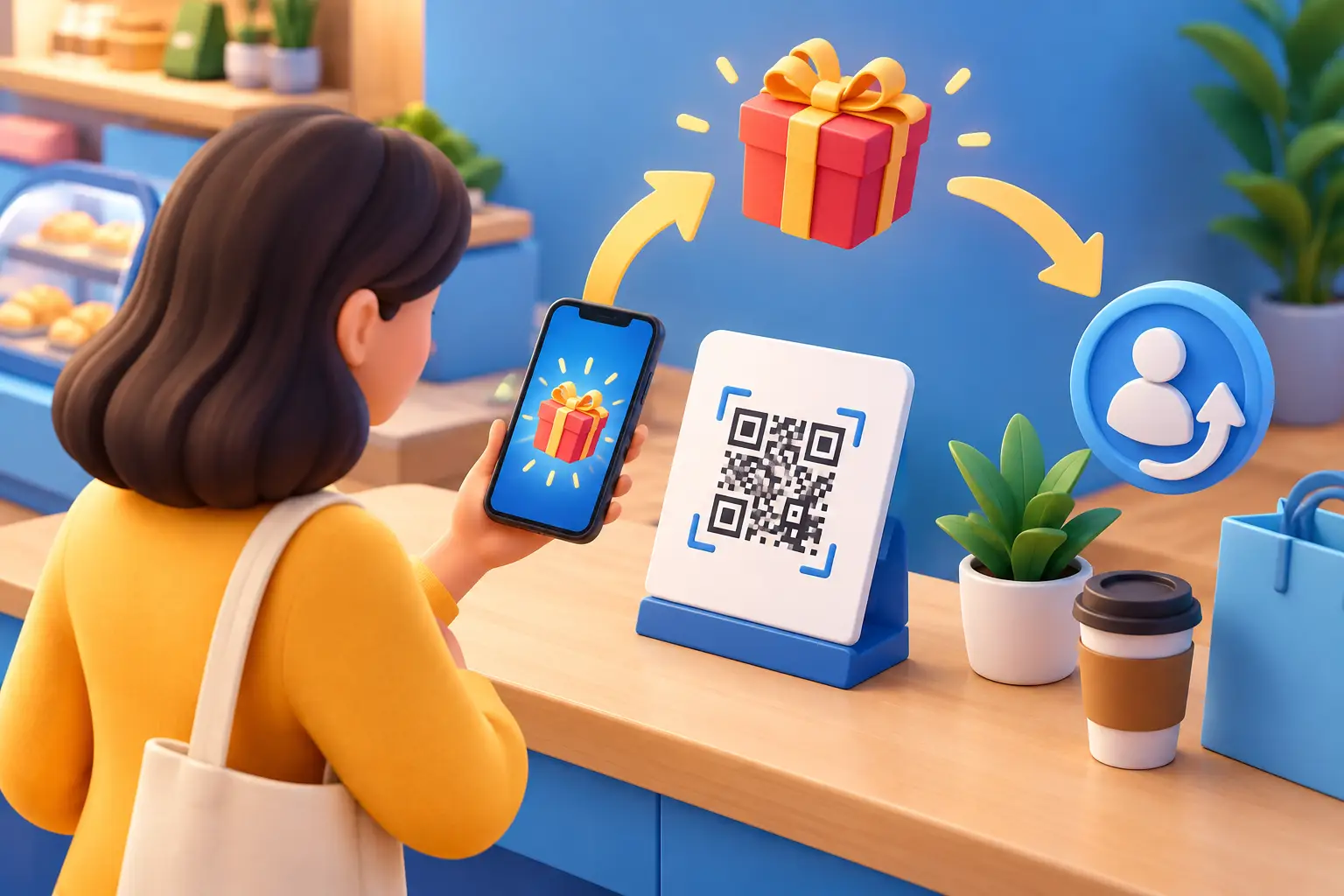
A customer who has already bought from you is far easier to bring back than someone who has never heard of you. That is why businesses that create QR reward campaigns well do not treat the QR code as a gimmick. They use it to turn each visit, appointment or purchase into a clear reason to return.
For a café, that might be a free hot drink after six purchases. For a salon, it could be bonus stamps for booking a quieter weekday slot. For a gym, it may be a reward for regular class attendance. The best campaign is not the one with the biggest giveaway. It is the one that fits naturally into how your customers already buy.
Why QR rewards work for local businesses
Paper stamp cards are familiar, but they are easy to lose, forget at home or leave at the bottom of a bag. A QR-based digital loyalty card keeps the same simple behaviour – buy, scan, collect, reward – while giving your business much more control.
Customers can collect stamps on their phone after a qualifying purchase. You can set the reward, run a limited-time bonus-stamp offer and share promotions with people who have already chosen to engage with your business. That creates a direct route back to your regulars without relying solely on social media posts being seen.
The commercial value comes from frequency. If a customer usually visits once a month, a well-timed reward campaign may encourage a second visit. Across dozens or hundreds of customers, those additional visits can add up quickly. It also helps staff give every customer a consistent loyalty experience, even when the shop is busy.
How to create QR reward campaigns with a clear goal
Start with one business problem, rather than starting with a discount. Do you need more weekday footfall? Are customers buying once but not returning? Is there a new menu item, treatment or service you want people to try? Your answer should shape the campaign.
A reward campaign with no specific purpose can still generate scans, but it is harder to judge whether it has made a difference. A focused campaign makes the decision simple: if you want to fill quieter Tuesday afternoons, reward visits during that period. If you want to increase average spend, offer a bonus stamp when customers buy a qualifying product alongside their usual purchase.
Keep the first campaign easy to explain. Customers should understand what they need to do in a few seconds, and staff should be able to issue stamps without stopping the queue.
Choose a reward worth returning for
The reward needs to feel achievable and valuable, but it must also protect your margin. A free item, upgrade, add-on or percentage-off offer can all work. What matters is choosing something with a sensible cost compared with the repeat revenue it encourages.
A coffee shop might offer a free regular drink after seven paid drinks. A beauty business might offer £10 off a higher-value treatment after several appointments. A retailer could reward customers with a voucher that applies to a future spend over a set amount. The last option can be useful when you want the reward to generate another meaningful transaction rather than simply reduce the value of the next one.
Avoid making the target so high that it feels out of reach. Equally, do not give away too much too early. There is no universal number of stamps. It depends on your average customer spend, how often people normally visit and the cost of the reward. Start with a realistic target, then adjust after you have seen how customers respond.
Set clear qualifying rules
Small details prevent awkward conversations at the till. Decide whether every purchase earns a stamp or whether there is a minimum spend. Be clear about whether stamps apply to discounted items, gift cards, bundles or selected services.
Write the customer-facing rule in plain English. For example: “Collect one stamp with every hot drink. Your seventh drink is on us.” If there is a minimum spend, say so. Clear rules feel fair and make it easier for your team to apply the campaign consistently.
You should also decide how rewards are redeemed. In many cases, a reward should be used on a later visit. That creates the return journey your campaign is designed to encourage. Same-visit redemption can suit some businesses, but it rarely does as much for repeat custom.
Make scanning part of the normal checkout routine
The campaign only works when customers actually scan. Place a simple prompt where the purchase happens: at the till, on a table talker, by the card terminal or at reception. Staff should mention it naturally, especially when serving new customers: “Would you like to collect a stamp on your phone?”
Do not overcomplicate the explanation. Customers do not need a technical walkthrough. They need to know they can join quickly, collect rewards digitally and avoid carrying another paper card.
Staff confidence matters as much as the QR code itself. Give your team a short script and make sure everyone understands when to issue a stamp, how to handle a reward and where to find the business app. A campaign can lose momentum when one team member promotes it enthusiastically and another forgets to mention it.
For multi-location businesses, agree whether stamps and rewards can be used at every site or only at the location where they were earned. Either approach can work, but customers need a consistent answer. Shared rewards can encourage people to keep choosing your brand wherever they are, while location-specific rewards may suit independently managed branches.
Use bonus stamps to change customer behaviour
Your standard loyalty programme gives customers an ongoing reason to return. QR reward campaigns become even more effective when you add short, purposeful bonus-stamp promotions.
A bonus stamp is useful when you want to influence when, what or how often people buy. A restaurant could offer double stamps on a quiet Monday. A salon could give two extra stamps for pre-booking the next appointment before leaving. A shop could run a weekend bonus-stamp campaign around a new product range.
Make these promotions time-bound. “Double stamps this Friday” feels more immediate than a permanent extra-stamp offer. The urgency gives customers a reason to act now, while the underlying loyalty card gives them a reason to keep coming back afterwards.
Use targeted messages carefully. Existing customers are more likely to respond when an offer feels relevant to their habits. A regular breakfast customer may appreciate a midweek coffee offer. Someone who has not visited for a while may respond better to a simple welcome-back reward. Sending every promotion to every customer can make messages easier to ignore.
Loyalty Magnet helps businesses combine QR stamp collection with promotional messages, images, videos and special offers, so your loyalty programme can continue the conversation after the customer has left the premises.
Promote the campaign beyond the counter
A QR reward campaign should be visible before customers reach the till. Mention it on in-store signage, printed receipts, window displays and your usual social channels. The message should lead with the benefit, not the technology. “Collect seven stamps, get your next coffee free” is stronger than “We have a new QR code.”
If you run appointments or bookings, mention the reward in confirmations and follow-up communications. If you deliver orders, include a prompt in the packaging. The aim is to make joining feel like an obvious extra benefit of choosing you.
Keep campaign artwork consistent with your brand. Use recognisable colours, a clear reward statement and one simple action. A crowded poster with lots of conditions will be ignored, particularly in a fast-moving café, salon or shop environment.
Measure results, then improve the next offer
Do not judge a campaign only by how many people join. Sign-ups are useful, but repeat visits and redeemed rewards tell you whether the campaign is influencing real customer behaviour.
Review how many stamps are issued, how many customers progress towards a reward and how many come back to redeem it. Compare busy and quiet periods. Look at whether a bonus-stamp promotion increases visits on the day you intended, rather than simply rewarding customers who would have come anyway.
There will be trade-offs. A generous reward may drive strong engagement but eat into profit. A higher threshold may protect margin but fail to motivate customers. If redemption is low, the goal may be too distant or customers may not be receiving enough reminders. If redemption is very high but spend is flat, consider attaching the reward to a minimum future purchase.
Test one change at a time. Change the reward threshold, the qualifying spend or the timing of a bonus-stamp campaign, then review the result. This gives you a clearer picture than changing everything at once.
Keep it simple enough to run every day
The strongest QR reward campaigns are not elaborate. They are easy for customers to understand, easy for staff to operate and clearly connected to a business goal. A digital loyalty programme should reduce admin, not create another job for an already busy team.
Start with a reward your regulars will genuinely want. Put the QR journey in front of customers at the moment they pay. Then use timely bonus stamps and relevant updates to give them another reason to choose you next week, not just someday. Consistent small nudges are often what turn a one-off purchase into a familiar habit.