
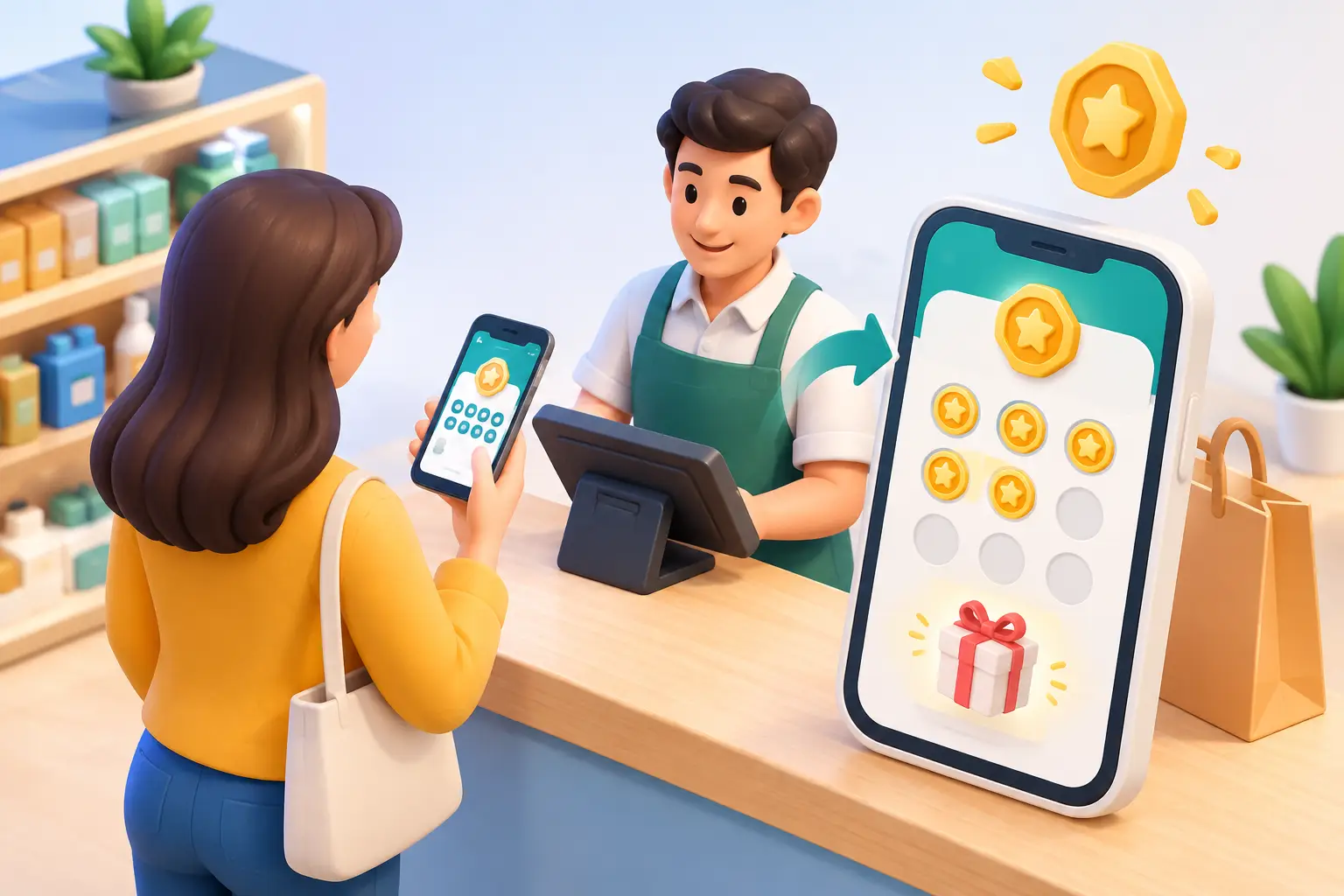
A customer has paid for their coffee, haircut or gym session. This is the moment that matters. How merchants issue reward stamps can decide whether loyalty feels quick and worthwhile or becomes another forgotten task at the till. A digital stamp should take seconds to give, be easy for the customer to collect and move them one step closer to returning.
Paper cards made the idea of loyalty familiar, but they also created friction. Cards get left at home, lost in pockets or damaged in the wash. Staff may forget to stamp them during a busy rush. Most importantly, once a customer walks out with a paper card, the business has no useful way to encourage their next visit.
Digital loyalty changes that. It keeps the familiar appeal of collecting stamps while giving merchants more control, clearer visibility and a direct route back to customers who have already shown an interest.
How merchants issue reward stamps in a digital programme
The best digital stamp process is simple: the customer opens their loyalty card on their phone, presents a unique QR code and a member of staff scans it using the business app. The stamp is added immediately to the customer’s digital card.
There is no printed card to carry and no handwritten tally to check. The customer sees their progress straight away, which gives the reward a sense of momentum. For the business, every approved scan is tied to a real customer card rather than a loose piece of paper.
With Loyalty Magnet, merchants can create a branded digital loyalty card, set the number of stamps required for a reward and issue stamps from a phone. That makes it practical for a single independent café, a busy salon or a growing group of locations. Staff do not need specialist equipment or lengthy training. They simply use the business app as part of the normal checkout conversation.
The exact process can vary slightly by business type. A café might issue one stamp per hot drink. A beauty salon may add a stamp after each appointment. A retailer could issue a stamp when a customer spends above a chosen amount. The principle remains the same: make the earning rule clear, then make the stamp quick to issue.
Start with a reward customers genuinely want
Issuing stamps efficiently is only half the job. Customers need a reason to collect them. A weak reward creates a weak habit, even if the technology works perfectly.
For frequent, lower-value purchases, a simple offer often performs well. Buy nine coffees, receive the tenth free. Collect six stamps, get a complimentary bakery item. These rewards are easy to understand at a glance and achievable without a long wait.
Higher-value businesses may need a different structure. A salon might offer a treatment upgrade after several visits. A gym could reward consistent attendance with a guest pass, a free class or a branded item. The prize does not always have to be expensive, but it should feel relevant to why customers choose your business.
There is a trade-off between generosity and profitability. Requiring too few stamps can reduce margin, while requiring too many makes the finish line feel out of reach. Look at typical visit frequency and average spend before choosing the target. If most customers visit weekly, a reward after six to ten visits can feel realistic. If visits happen monthly, consider a smaller target or a higher-value incentive.
Make issuing stamps part of the service routine
The fastest loyalty schemes are built into the same habits staff already follow. Asking, “Are you collecting stamps with us?” before payment is usually enough to prompt participation. If the customer is enrolled, they present their QR code. If not, staff can invite them to join while the purchase is fresh in their mind.
Keep the wording friendly and consistent. A café team might say, “Would you like a stamp on your digital loyalty card?” A salon receptionist could ask, “Shall I add today’s visit to your rewards card?” These small prompts help prevent missed stamps without turning service into a sales script.
Training should cover the few situations that tend to cause confusion: a customer has not downloaded the app yet, their phone battery has died, they are unsure which card to open, or a reward is ready to redeem. Give staff a clear answer for each situation. Confidence at the counter matters because customers quickly lose interest if collecting a stamp feels awkward.
Managers should also make expectations clear. If every qualifying purchase earns a stamp, every staff member needs to follow that rule. Inconsistent issuing damages trust. Customers should not have to ask twice or wonder why they earned a stamp last week but not today.
Set rules that protect the offer without confusing people
A loyalty programme needs straightforward rules, particularly when stamps are connected to spend. Decide whether customers earn one stamp per visit, per item, per transaction or after reaching a minimum spend. Then communicate it in plain English on the card and through staff messaging.
For example, “One stamp for every coffee” is clearer than a complicated points calculation. “One stamp on purchases over £15” can work well for retail, provided it is visible before the customer pays. Clarity reduces disputes and helps staff issue stamps consistently.
Think carefully about exclusions. It may be sensible to exclude discounted items, gift cards or selected services, but too many restrictions make a reward programme feel mean-spirited. Keep exceptions limited and easy to explain. The goal is to encourage repeat custom, not create a set of terms customers need to decode at the counter.
Digital systems also offer useful control when a mistake happens. If a stamp is issued in error, a manager can review the account activity rather than relying on recollection. That protects the value of the programme while keeping the customer experience simple.
Use bonus stamps to create a reason to visit now
Once the basic scheme is running well, bonus stamps can give quieter periods a commercial lift. A restaurant could offer double stamps on Tuesday evenings. A salon might run a bonus-stamp campaign for weekday appointments. A shop can reward a new product launch or encourage customers to return after a seasonal lull.
The offer works best when it has a clear purpose. Do not give away extra stamps simply because you can. Tie them to a time, product, service or behaviour that supports the business. If Monday mornings are slow, bonus stamps on breakfast purchases can help shift demand. If you want more customers to try a premium service, add an extra stamp for booking it.
This is where digital loyalty is more useful than a paper card. Merchants can tell active customers about the campaign directly through promotional messages, images, videos and special offers. Instead of hoping people notice a poster, you can put a timely reason to return on the phone they already use to hold their loyalty card.
Track the numbers behind each scan
A stamp is not just a mark of progress. It is evidence of a customer visit. Over time, that activity can show whether your loyalty programme is encouraging the behaviour you want.
Start with practical questions. How many customers have joined? How often are stamps issued? How many rewards are redeemed? Are customers returning more frequently after joining? A reward that is never redeemed may be set too high or poorly explained. A reward redeemed very quickly may be generous enough to affect margin, but it may also be doing exactly what it should by driving repeat visits.
Compare campaigns rather than relying on guesswork. If double stamps on a quiet day increase visits without reducing average spend, that is useful information. If a particular message creates little response, change the offer, timing or audience. Digital programmes give business owners real-time insight that paper cards cannot provide.
For multi-site operators, consistency becomes even more valuable. A shared loyalty structure lets customers recognise the programme wherever they visit, while managers can still review performance across locations. The right setup depends on whether branches have the same menu, services and customer base, but the customer experience should remain easy to recognise.
Keep the customer feeling rewarded, not processed
The strongest stamp programmes feel personal even when the issuing process is highly efficient. Celebrate progress when a customer is close to a reward. Thank them when they redeem it. Send offers that relate to what they are likely to value, rather than sending the same message to everyone.
Avoid over-contacting customers. A useful offer at the right moment is welcome; repeated generic promotions can be ignored or switched off. Use loyalty activity to make communications more relevant. Someone who visits regularly may respond to a bonus-stamp event, while a customer who has not returned for a while may need a simple nudge or a limited-time incentive.
Reward stamps work because they turn a routine purchase into visible progress. When issuing a stamp is quick for staff, satisfying for customers and connected to a sensible follow-up message, each visit has a better chance of becoming the next one. Start with a clear reward, make the scan a natural part of service and let every stamp give customers a reason to come back.