
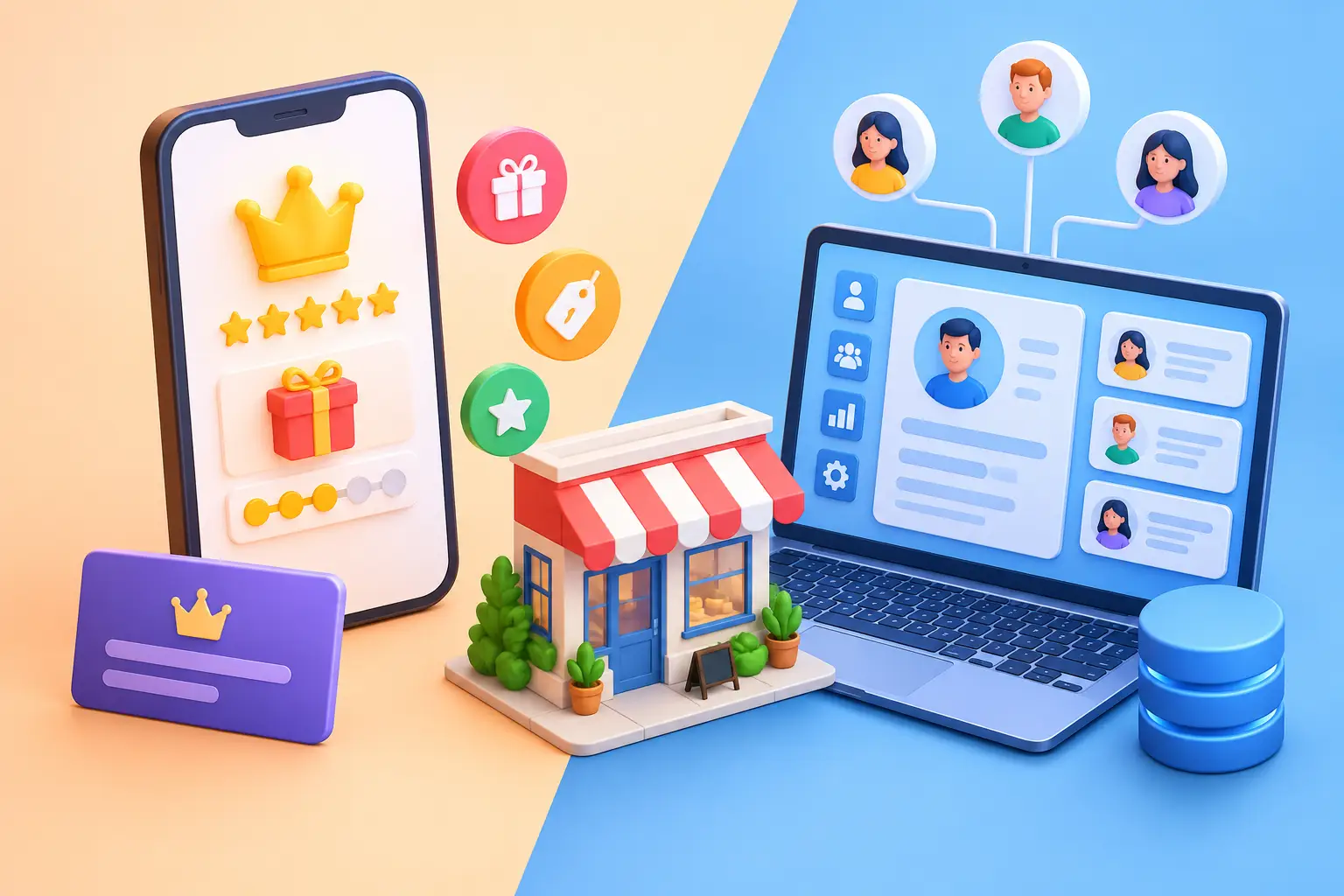
A customer has visited your café six times, had a great haircut twice, or bought from your shop every month this year. The real question is not whether they like your business. It is whether you have a practical way to bring them back. In the loyalty app versus CRM decision, that difference matters more than the label on the software.
For many local businesses, a full CRM can sound like the sensible grown-up choice. It promises customer records, sales pipelines, reports and automations. But if your immediate goal is more repeat visits, better customer contact and a reward customers will actually use, a mobile loyalty app may be the faster and more useful starting point.
Loyalty App Versus CRM: The Core Difference
A loyalty app is built around repeat custom. It gives customers a digital card on their phone, lets them collect stamps or points, and rewards them for returning. The experience is familiar: buy nine coffees, get the tenth free; visit for a treatment, collect a stamp; spend regularly, receive a reward or bonus offer.
A CRM, or customer relationship management system, is built around managing customer information and sales activity. It can store contact details, track enquiries, record notes, assign follow-ups and report on a longer customer journey. It is particularly useful where a sale involves several conversations, appointments, quotes or team members.
Neither is automatically better. They solve different commercial problems.
What a loyalty app does best
A loyalty app makes repeat behaviour visible and rewarding. Customers scan a QR code, receive a digital stamp and can see how close they are to their next reward. That small moment creates a reason to return rather than trying somewhere else next time.
For the business, it also replaces the limitations of a paper card. Paper cards are lost, forgotten in a wallet or impossible to contact later. A digital programme allows you to build a contactable audience of people who have already chosen your business. You can then send relevant promotions, special offers, bonus-stamp campaigns and updates directly to their phone.
This is especially valuable for cafés, restaurants, salons, barbers, gyms and independent retailers. These businesses do not usually need a complicated sales pipeline. They need more customers to come back next week, next month and before a competitor becomes their new habit.
What a CRM does best
A CRM earns its place when every customer relationship needs careful management. Think of a wedding venue following up on enquiries, a commercial supplier managing quotes, or a service business tracking a long booking process. In these cases, knowing who said what, when to follow up and where each opportunity sits can protect revenue.
A CRM can also become useful as a business grows. A multi-person sales team, several types of customer account, corporate clients or high-value bookings often require structure that goes beyond a stamp card and promotional message.
The trade-off is effort. A CRM only delivers useful insight when staff keep records current, follow agreed processes and understand how to use its features. For a busy owner-manager, that can become another system to maintain rather than a tool that drives action.
Compare the Day-to-Day Experience
The simplest way to choose is to look at what happens during a normal trading day.
With a loyalty app, the customer journey is quick. A customer pays, your team scans their QR code, and the stamp is added. When you want to encourage a quieter Tuesday, promote a new menu item or fill last-minute appointments, you can send a targeted offer to people already familiar with your brand. The activity is closely tied to the till, the visit and the next visit.
With a CRM, the workflow is usually more office-based. Someone enters contacts, updates records, logs calls and sets tasks. That is worthwhile when sales depend on follow-up. It is less natural when your staff are serving a lunchtime queue or checking in gym members.
Cost and training matter too. Enterprise CRM platforms can offer a huge range of capabilities, but small businesses may pay for features they will not use. A loyalty app is generally easier to introduce because staff already understand the principle: scan, stamp, reward. Customers understand it too, because it improves a familiar paper-card experience rather than asking them to learn a new process.
When a Loyalty App Is the Better Fit
Choose a loyalty app first when repeat purchases are the engine of your business. If a regular customer returning one extra time each month would make a noticeable difference to takings, loyalty should not be treated as an optional extra.
It is a strong fit if you want to replace paper stamp cards, reward frequent visitors, run offers without printing leaflets, or keep in touch with customers after they leave the premises. It also works well when your team needs a tool they can use from a phone with minimal training.
The best programmes are clear and achievable. A reward should feel worth earning, but not so distant that customers lose interest. A coffee shop may offer a free drink after a set number of purchases. A salon might reward repeat appointments or offer bonus stamps during traditionally quieter periods. A retailer may create a reward that encourages customers to return for a future purchase.
The programme should suit your margin and buying cycle. Giving away too much can reduce profit. Making the reward too difficult can reduce participation. Start with a simple offer, watch redemption and return behaviour, then adjust based on what your customers actually do.
Loyalty Magnet is designed for this practical middle ground: branded digital loyalty cards, QR-code stamp issuing and direct marketing tools that help businesses turn engagement into another visit.
When a CRM Is Worth the Investment
A CRM may be the right first purchase if your business sells high-value services with a longer decision period. If leads arrive through phone calls, web forms, referrals and consultations, and you need to ensure none are missed, a CRM can create useful discipline.
It can also be the better choice where relationships are individual rather than transactional. For example, a business that prepares detailed proposals or manages ongoing business accounts needs a clear record of conversations, requirements and next steps.
That does not mean customer loyalty stops mattering. It means the loyalty mechanism may sit alongside the CRM rather than replacing it. A restaurant group could use a CRM or booking system for event enquiries while running a mobile loyalty programme for regular diners. A gym could track membership sales in one system and use loyalty rewards and campaigns to keep members engaged between visits.
The key is not to force one platform to do every job. A CRM should manage complex relationships. A loyalty app should make returning easy, rewarding and visible.
Questions to Ask Before You Choose
Start with the behaviour you want to change. Are customers visiting once and failing to return? Are quieter days hurting weekly revenue? Do you have no way to contact people once they walk out of the door? These are loyalty and retention problems.
Next, consider your customer journey. Does someone decide, buy and return quickly? A loyalty app is likely to deliver value sooner. Does a customer need several conversations before committing? A CRM may be more urgent.
Also look honestly at your team’s time. If a system requires staff to enter detailed notes after every interaction, will that happen during busy periods? A tool only works when it fits the way your business already operates. Simple processes are more likely to be followed consistently.
Finally, consider the data you need. For loyalty marketing, collect only the information that helps you communicate meaningfully and make sure customers understand what they are signing up for. Relevant offers build goodwill. Too many irrelevant messages do the opposite.
Start With the Next Repeat Visit
Small businesses often assume sophisticated customer retention needs sophisticated software. Usually, it needs a clear reward, an easy customer experience and a reason to return soon. A loyalty app gives you those foundations without turning your team into software administrators.
If your business later needs detailed lead tracking, account management or long sales workflows, a CRM can add real value. But if the immediate opportunity is sitting in the customers who already know and like you, make their next visit easier to earn. A simple digital reward today can become a stronger customer habit tomorrow.