
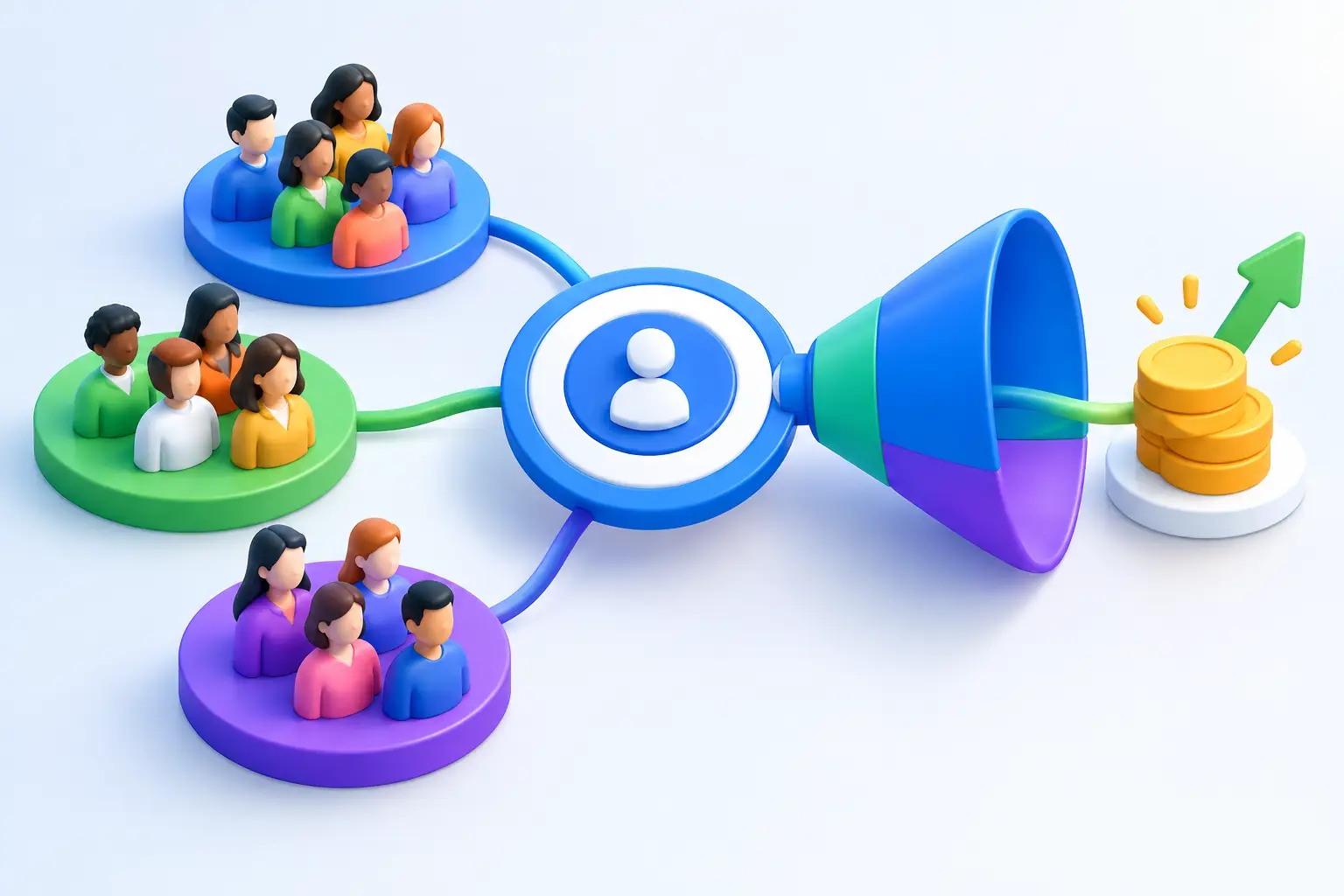
A regular customer who has not visited for three weeks needs a different nudge from someone who popped in yesterday. That is the point of this guide to offer audience segments: send the right offer to the right group, rather than sending the same message to everyone and hoping it lands.
For cafés, salons, gyms, restaurants and local retailers, audience segmentation does not need to mean complicated spreadsheets or a costly CRM project. It simply means grouping customers by what they do, then giving them a reason to return. Simple. Powerful. Effective.
What offer audience segments actually mean
An audience segment is a group of customers who share a useful trait or behaviour. That could be how often they visit, what they tend to buy, how close they are to a reward, or whether they have stopped coming in.
An offer is the incentive you give that group. It might be double stamps on a quiet Tuesday, a complimentary coffee with a treatment, an early booking offer, or a reminder that a reward is ready to collect.
The aim is not to discount everything. It is to make your marketing more relevant. A customer who already visits twice a week may respond well to bonus stamps that build loyalty. A customer who has drifted away may need a stronger reason to make their next visit. Treating both customers identically can waste margin and weaken the value of your offers.
Start with customer behaviour, not assumptions
Many businesses begin by segmenting people by age, postcode or broad interests. Those details can be useful, but behaviour is usually more valuable for a local loyalty programme. You can act on it quickly.
Look at the patterns your business sees every week. Who visits often? Who has a nearly full digital loyalty card? Who joined recently but has not returned? Which customers use weekday offers, and which only come in at weekends?
You do not need dozens of segments. In fact, too many groups can make campaigns harder to manage and harder to learn from. Start with a few groups that have a clear business purpose and a clear offer attached.
Your most loyal regulars
These customers already choose you often. Their offer should make them feel recognised without giving away more than necessary. Think early access to a new menu item, a members-only bonus stamp day, or a small thank-you reward after a set number of visits.
The commercial goal is frequency and advocacy. Keep the message warm and specific: “You are one stamp away from your reward. Pop in this week and we will add an extra stamp on Tuesday.”
New customers who need a second visit
Getting someone to download or use a digital loyalty card is a good start. The valuable moment is the second visit, when a customer begins to form a habit.
A new customer offer can be modest. A café might offer double stamps on the next visit within seven days. A salon could send a reminder about rebooking. A gym may encourage a second class or visit with a bonus-stamp campaign. The offer is less about a large saving and more about creating momentum.
Customers close to a reward
A customer with seven stamps on an eight-stamp card is already engaged. They do not need a generic promotion. They need a timely reminder that their reward is within reach.
This is one of the most efficient segments to contact because the action required is small. A clear message can turn an almost-complete card into a visit this week, while giving the customer the satisfying feeling that their loyalty has paid off.
Lapsed customers
A lapsed customer is someone who used to visit but has gone quiet. What counts as “lapsed” depends on your normal buying cycle. For a lunch spot, two or three weeks might be enough. For a hair salon, it may be several months.
Give these customers a genuine reason to come back. A limited-time extra stamp, a return-visit treat, or an invitation tied to a new product can work well. Avoid sounding desperate or sending repeated messages. One relevant, well-timed offer is more likely to feel welcome than a stream of discounts.
Build offers around your business goal
The best segments are not chosen just because the data is available. Choose them because they help solve a real trading challenge.
If Tuesdays are slow, create an offer for customers who often visit at the weekend or who have not visited recently. If your average spend is low, reward a higher-value purchase rather than offering a blanket percentage discount. If bookings tend to drop after a first appointment, focus on a follow-up reward that encourages a second booking.
Before setting up a campaign, ask one question: what behaviour do we want more of? Your answer should be specific. “More sales” is too broad. “Bring weekday customers in before 11am” or “get first-time diners back within 14 days” gives you something you can measure.
This is where a digital loyalty programme earns its place. With Loyalty Magnet, businesses can combine branded digital cards, QR-code stamps and targeted promotional messages, so the reward and the reminder work together rather than sitting in separate systems.
A practical guide to offer audience segments
Once you have picked a business goal, use a simple process to build the campaign.
First, define the group in plain language. For example: customers who have collected at least one stamp but have not visited for 21 days. If you cannot describe the group clearly, it is probably too broad or too complicated.
Next, choose one action you want them to take. Visit this week, book again, try a new service, or spend enough to earn a bonus stamp are all clear actions.
Then match the offer to the effort required. A small action should receive a small but appealing incentive. A bigger commitment, such as returning after a long absence or trying a premium service, may need a more meaningful reward. The balance matters. An over-generous offer can train regular customers to wait for discounts, while an offer with little perceived value may be ignored.
Finally, set a time limit and write a message that makes the next step obvious. “Collect double stamps on any hot drink before Friday” is clearer than “Special loyalty offer available now.” Use images or video when they help show a new menu item, product range or seasonal promotion, but keep the message focused on one idea.
Keep your segments useful as you grow
Segments should change as your business changes. A single independent café may only need regulars, new customers, reward-near customers and lapsed customers. A growing salon group or multi-site operator may also want to compare locations, promote a quieter branch, or tailor offers to customers of a particular service.
Do not assume every segment should receive a message every week. Relevance depends on timing as much as content. A customer receiving a reward reminder at the right moment may appreciate it. The same customer receiving unrelated offers three times in five days may switch off.
Set practical rules for frequency. For example, reserve regular promotional messages for customers who have opted in and keep a gap between campaigns unless there is a clear reason to communicate, such as a reward becoming available. The goal is to stay visible, not to become background noise.
Measure what brings people back
A campaign is only useful if you learn from it. Track the number of customers reached, the number who return or redeem, and the additional visits or sales generated. For bonus-stamp campaigns, also watch what happens afterwards. Did customers return again once the promotion ended, or did activity disappear straight away?
Compare similar campaigns over time. Perhaps double stamps perform better than a money-off voucher for your regular coffee customers. Perhaps lapsed salon clients respond better to a personal rebooking prompt than a broad discount. Small tests give you evidence, and evidence makes future offers more profitable.
It also helps to protect your best customers. If a reward is performing well with regulars, do not automatically increase its value. You may get better results by improving the timing or wording instead. Strong loyalty is built through consistent value, not constant price cuts.
The most useful offer is rarely the loudest one. It is the one that reaches a customer at the right moment, gives them a worthwhile reason to return and makes choosing your business feel easy again.