
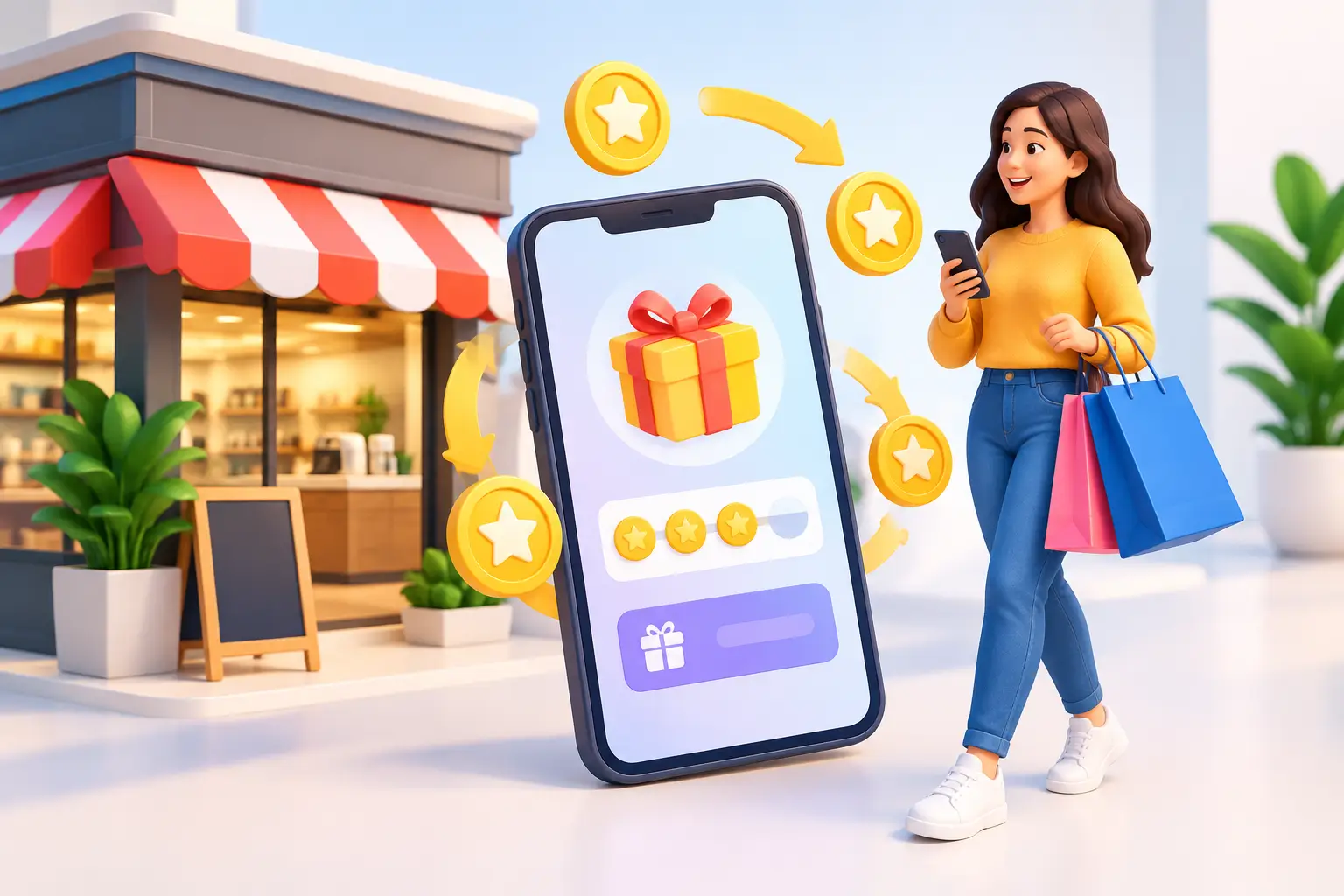
A customer has just paid for their coffee, haircut or gym session. They enjoyed the experience, but there is nothing to remind them to return next week instead of trying somewhere else. That small gap is where merchant reward apps earn their place. They turn an everyday purchase into the start of a repeat-customer relationship – without asking staff to manage piles of paper cards or learn complicated software.
For local businesses, loyalty is not about collecting vast amounts of data or building a corporate points scheme. It is about giving regular customers a clear reason to choose you again. A familiar digital stamp card, a worthwhile reward and an occasional timely offer can do exactly that.
What merchant reward apps do for local businesses
Merchant reward apps give businesses a mobile way to run customer loyalty programmes. A customer holds a digital card on their phone, earns stamps or points when they visit, and receives a reward once they reach the target you have set.
The best apps go further than replacing a paper card. They help you stay visible after a customer leaves the premises. You can send updates, special offers, bonus-stamp campaigns and visual promotions to people who have already shown an interest in your business. That makes your marketing more relevant than a message aimed at the entire neighbourhood.
For a café, this could mean offering double stamps on quieter weekday afternoons. For a salon, it may be a reward that encourages clients to rebook before they drift to another provider. A retail shop might promote a new range to customers who have visited before. The principle stays the same: reward repeat custom and make the next visit feel worthwhile.
Why paper stamp cards stop working
Paper cards are simple, which is why they have lasted so long. But simple is not always effective. Customers lose them, forget them at home or leave them in a drawer. A full card is sometimes presented months after the original purchases, with no opportunity for the business to encourage another visit in the meantime.
They also give you no practical route back to the customer. Once a paper card leaves the counter, you cannot tell customers about a seasonal menu, a new treatment, a local event or a limited-time offer. You are relying on them to remember you.
A digital loyalty programme keeps the card where most customers already keep it: on their phone. It also gives the business a direct, permission-based communication channel. That does not mean sending constant promotions. It means being able to send a useful message when there is a genuine reason to visit.
The features that matter most in merchant reward apps
Not every loyalty app is a good fit for an independent business or growing local brand. The useful features are the ones that reduce work for your team while helping you create more repeat visits.
A familiar reward journey
Customers should understand the programme in seconds. Digital stamps work well because the behaviour is already familiar: buy, scan, collect and claim. A unique QR-code scan gives staff a quick way to issue stamps while making the reward feel immediate for the customer.
Keep the reward achievable. If customers need an unrealistic number of visits before receiving anything, enthusiasm fades. If the reward is too generous, it can reduce margin without creating meaningful loyalty. A free coffee after nine paid coffees, a product discount after several purchases, or a bonus service after regular appointments can be a sensible starting point. The right threshold depends on your average spend, purchase frequency and profit margin.
Branded cards and flexible campaigns
Your loyalty card should look like your business, not a generic scheme. Your colours, logo and reward wording help customers recognise the programme every time they open it.
Flexibility matters too. A café may want a simple ongoing stamp card, while a restaurant could run a short-term bonus-stamp offer to increase midweek bookings. A gym may reward attendance, and a salon may choose a reward that supports higher-value services. Merchant reward apps should let the programme fit your business model rather than forcing your business into one fixed format.
Marketing that reaches engaged customers
A loyalty member is already warmer than a stranger scrolling past an advert. They have visited, downloaded your card and chosen to hear from you. That makes promotional messages much more useful when they are relevant and well timed.
Look for the ability to send more than plain text. Images and video can help a restaurant show a new dish, a retailer present a new collection or a salon demonstrate a treatment result. Used carefully, this type of communication keeps your brand memorable between visits.
The trade-off is frequency. Too many messages can make even loyal customers switch off. A good rule is to send fewer, better offers: something seasonal, specific or genuinely valuable. Bonus stamps are often effective because they reward action without training customers to wait for large discounts.
Clear insights without a spreadsheet headache
You do not need a data analyst to make better decisions. You do need a clear view of whether customers are joining, collecting stamps and returning for rewards.
Useful business insights can show which campaigns generate activity, how many loyalty cards are active and whether certain offers are encouraging repeat visits. These figures help you test rather than guess. If a Tuesday bonus-stamp campaign brings customers in, repeat it. If a reward is rarely claimed, make it easier to understand or reconsider the target.
For multi-site operators, it is especially valuable to see how loyalty activity performs across locations. A franchise needs enough consistency to protect the brand, while still allowing local teams to run offers that suit their own customers.
How to launch a loyalty programme that customers use
The technology should be quick to set up, but success still depends on a clear launch. Start with one reward that is easy to explain. Complicated tiers, exclusions and lengthy terms create questions at the till and slow down adoption.
Decide exactly when customers receive stamps and make sure every team member understands the process. Staff do not need a sales script. They simply need a natural prompt, such as asking whether the customer would like to collect a digital stamp today. The first few weeks are when this habit is built.
Make the value visible in the venue. Mention the reward on your counter, menu, booking desk or receipt point. Customers are far more likely to join when they can see what they are working towards. If you have several locations, use the same core explanation everywhere so the experience feels consistent.
Then give people a reason to start now. A welcome stamp, a limited-time bonus or a launch reward can encourage the first scan. The goal is not just app downloads. It is to get customers into the collection habit and give them an early positive experience.
Avoid turning loyalty into another job
The strongest loyalty programme is one your team can run during a busy service. If issuing a stamp takes several steps, staff will skip it when the queue builds. If managers need to spend hours preparing campaigns, messages will become irregular and the programme loses momentum.
Choose a system designed for day-to-day use on a phone, with straightforward card creation, QR-code scanning and simple campaign controls. Loyalty Magnet, for example, combines digital cards and rewards with rich-media customer messaging, so businesses can manage retention and promotions in one practical tool.
It also helps to nominate one person to review results each month. They can check what has been sent, which offer performed best and whether the reward still makes commercial sense. This is not a major reporting task. It is a short commercial check that keeps your programme useful.
Measure the behaviour that leads to revenue
Downloads can look encouraging, but they are not the final measure. Focus on customer behaviour: how many people collect stamps, how often they return, how many rewards are redeemed and whether campaigns create additional visits.
Reward redemptions should not be viewed as a cost in isolation. A redeemed reward often means a customer completed several paid visits to reach it. The more useful question is whether the programme has increased the frequency and value of those visits over time.
Give your scheme enough time to establish itself, then adjust one element at a time. You might test a different reward, introduce double stamps on a quiet day or send a more targeted offer. Small, measured changes are easier to understand than changing everything at once.
A loyalty app works best when it feels like a genuine thank-you rather than a hard sell. Make joining easy, make the reward worth collecting and keep your messages useful. Customers will have one more reason to come back, and your business will have a better way to make that next visit happen.