
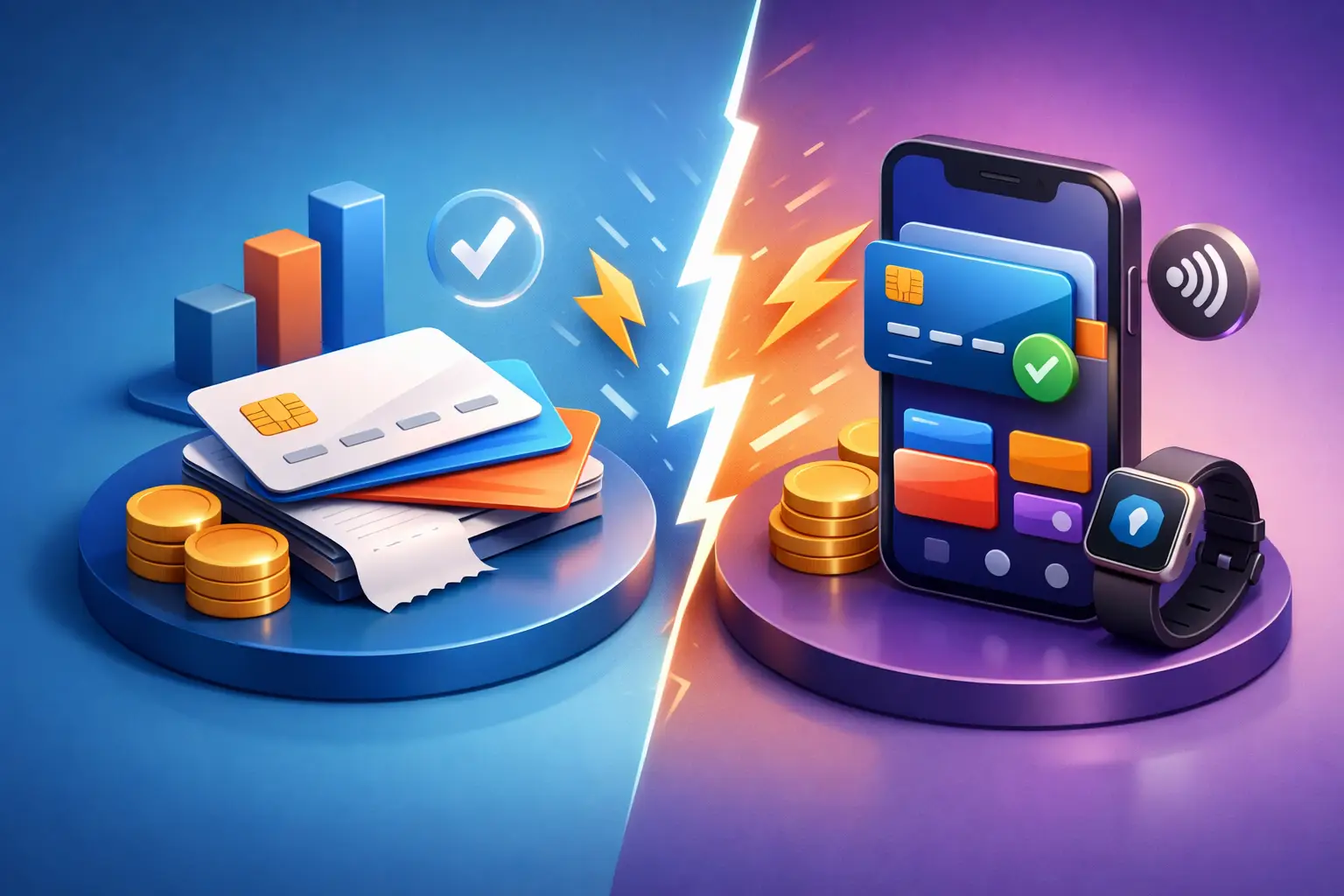
A paper stamp card seems wonderfully simple until a regular customer reaches the counter without it. The card is in another coat, at home, or already lost in a crowded purse. That small moment is why the conversation around paper cards versus mobile wallets matters for cafés, salons, restaurants, gyms and local shops. It is not really about paper versus a phone. It is about whether your loyalty scheme reliably brings people back.
Paper cards still have a place. They are familiar, low-cost to print and easy to explain in one sentence. But mobile loyalty gives a business more control over the customer relationship after the visit, not just at the till. For businesses focused on repeat sales, that difference can be significant.
Paper cards versus mobile wallets: the real difference
Both formats use the same proven idea: reward customers for coming back. A customer makes a purchase, earns a stamp and receives something worthwhile after a set number of visits. Familiarity is a strength. Nobody needs a lengthy explanation to understand a coffee card offering the tenth drink free.
The difference is what happens around that transaction. A paper card records stamps, but little else. Once it leaves your premises, it cannot remind a customer about their next reward, promote a quiet midweek offer or tell you how frequently they return.
A mobile wallet loyalty card stays on the customer’s phone. It can be scanned quickly at the point of sale, show their current progress and keep your brand visible between visits. When paired with business messaging tools, it becomes more than a digital version of a stamp card. It becomes a direct route back to people who have already chosen your business.
That does not mean every business must reject paper immediately. The best choice depends on your customers, your team and how much value you want your loyalty programme to create beyond handing out a free item.
Where paper loyalty cards still work well
Paper cards are easy to launch. Design the card, print a batch, brief the team and start stamping. There is no customer sign-up process, no app to download and no concern about a flat phone battery at the counter.
For a new business testing whether customers respond to a reward, paper can be a sensible starting point. It also suits occasional visitors who may not want another app for a one-off purchase. If your offer is simple and your footfall is largely walk-in, a physical card can create an immediate reason for a second visit.
The issue is that paper relies heavily on the customer doing the work. They need to keep the card, remember it and present it every time. Even your most loyal customers can lose it. When that happens, the reward journey starts again or your staff have an awkward decision to make at the till.
Paper also makes fraud and inconsistency harder to manage. Stamps can be copied, cards can be damaged and team members may apply different rules when a customer asks for missed stamps. These are small operational problems, but they add up when the business is busy.
Most importantly, a paper card gives you no practical way to reconnect with customers between visits. You may know that hundreds of cards have been handed out, but you cannot easily see who is close to a reward or encourage quieter customers to return.
Why mobile wallets give loyalty more momentum
Mobile loyalty programmes remove the problem of a forgotten card for customers who carry their phones everywhere. A digital card is available in seconds, and a QR-code scan can add a stamp without searching for a physical card, finding an ink stamp or replacing a worn-out batch.
That convenience helps at the counter, but the stronger commercial benefit comes afterwards. Customers can see how close they are to earning a reward. That visible progress matters. Someone with seven stamps towards a free treatment, lunch or class has a much clearer reason to choose you again rather than trying somewhere new.
For the business, a mobile wallet creates an opportunity to communicate with people who have already engaged. You can send a timely bonus-stamp campaign, announce a new menu item, share an image-led offer or promote availability during a traditionally quiet period. Rather than hoping a customer notices a poster or social post, you can put a relevant message in front of an existing customer base.
This is particularly useful for businesses with changing offers. A restaurant might encourage midweek bookings. A salon could fill gaps caused by cancellations. A gym may promote a referral incentive or a new class. A retailer can bring regulars back for a seasonal launch. The loyalty programme is no longer just a reward tracker. It supports repeat visits when they are most valuable.
Mobile systems can also provide clearer insight. Even simple reporting helps owners and managers understand how many customers are collecting stamps, which rewards are being claimed and whether a campaign has encouraged visits. You do not need an enterprise CRM or a marketing department to use that information. You simply need a clearer view than a box of partly completed paper cards can provide.
The trade-offs to consider before switching
A mobile approach does ask customers to take one extra step: joining your digital loyalty scheme. Some will be happy to do it immediately, especially if the reward is clear and the process is quick. Others may prefer paper, be less confident with apps or not have their phone with them at that moment.
This is where staff confidence matters. If your team can say, “Scan this code and your first stamp is ready,” sign-up becomes a natural part of service rather than a sales pitch. The process should be fast enough that it does not slow a busy queue. Clear rewards help too. Customers should know exactly what they will receive and how many visits it takes.
There is also a cost difference. Paper cards appear inexpensive because printing is cheap, but the true cost includes repeat print runs, staff time, lost cards, untracked rewards and missed opportunities to bring customers back. A digital platform has a subscription cost, yet it can replace those manual tasks while giving you marketing and insight tools that paper cannot offer.
For multi-site operators, digital loyalty is usually easier to manage. Customers can collect and redeem across participating locations according to the rules you set, while head office or franchise managers can maintain a consistent branded programme. Paper schemes can do this too, but keeping designs, stamp rules and reward policies aligned across locations takes more effort.
Privacy should be handled thoughtfully. Customers should understand what they are joining and receive messages that are useful, not constant. A well-run mobile programme feels like a benefit: progress towards a reward, a genuinely relevant offer or an update from a local business they enjoy. It should never feel like unwanted noise.
How to make a mobile loyalty programme work
The technology is only one part of the result. The strongest programmes are simple enough for staff to run consistently and worthwhile enough for customers to use repeatedly.
Start with a reward that fits your margin and buying pattern. A café may offer a free drink after a set number of purchases. A salon might reward repeat appointments with a complimentary add-on. A retailer could offer a discount after several qualifying visits. The reward should feel achievable, but not so generous that it reduces the value of regular sales.
Then make earning clear. Customers should know what qualifies for a stamp, whether there are exclusions and how they redeem. Confusion weakens trust quickly. A straightforward rule is easier for your team to explain and easier for customers to remember.
Use messages with purpose. If Tuesday afternoons are quiet, offer bonus stamps at that time. If a new service has launched, tell customers who are likely to care. If a customer is close to a reward, give them a reason to complete it. Targeted campaigns are more useful than sending the same promotion to everyone every week.
Finally, check the results. Look at sign-ups, active collectors, reward redemptions and responses to promotions. If uptake is low, the issue may be the reward, how staff introduce it or the visibility of your QR code. Small changes can make a noticeable difference.
Choosing the right option for your business
Paper cards are best when you need a very basic, immediate loyalty mechanic and your customers are unlikely to use a digital option. They can be a useful short-term test, especially for a small operation with a simple offer.
Mobile wallets are the stronger choice when repeat custom is central to your growth and you want to stay connected after the transaction. They reduce reliance on customers remembering a card, give your brand a place on their phone and create practical ways to encourage the next visit.
For many local businesses, the sensible move is not to make loyalty more complicated. It is to make it easier to use and more useful to the business. A platform such as Loyalty Magnet helps turn the familiar stamp-card habit into a branded digital programme with customer messaging and real-time visibility, without requiring specialist technical skills.
The best loyalty scheme is the one your team can run every day and your customers are happy to use. Give them a reward worth returning for, make collecting effortless and keep the conversation going after they walk out of the door.