
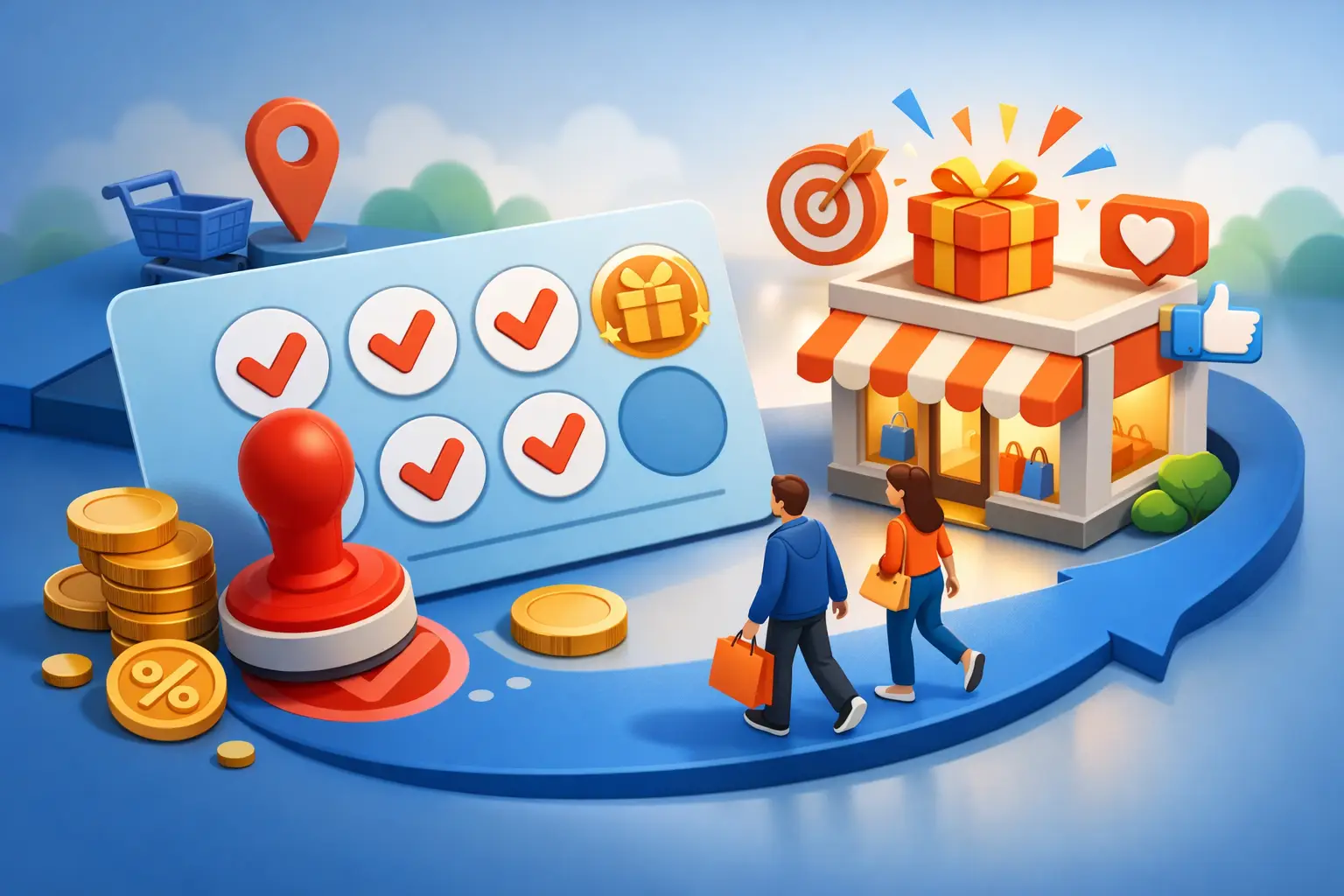
Your quietest Tuesday afternoon is not a branding problem. It is a reason-to-visit problem. A bonus stamp campaign gives customers that reason without forcing you to discount every sale. Offer an extra stamp at the right moment and a familiar loyalty card becomes a prompt to come back sooner, spend with purpose and keep your business front of mind.
For cafés, salons, gyms, restaurants and local shops, this is one of the simplest ways to turn a digital loyalty programme into an active sales tool. The customer already knows the reward. They already understand stamps. Your job is to make the next visit feel worthwhile now, rather than sometime next month.
What is a bonus stamp campaign?
A bonus stamp campaign is a limited-time promotion that gives customers more loyalty stamps than usual for a qualifying visit, purchase or action. A coffee shop might offer double stamps between 2 pm and 4 pm. A salon could give two extra stamps to customers who book their next appointment before leaving. A gym may reward a member with bonus stamps for attending a quieter weekend class.
The appeal is straightforward. Customers see faster progress towards a reward they genuinely want. In return, the business gets more repeat visits, better timing around quieter periods and a useful reason to communicate with people who have already chosen to engage.
Unlike a blanket price reduction, bonus stamps protect more of your margin. You are adding perceived value to a future visit rather than reducing the value of the current one. That does not make them right for every situation, but it makes them particularly useful where repeat custom matters more than a single transaction.
Why a bonus stamp campaign works
A stamp card is powerful because progress is visible. When someone has collected six of ten stamps, the reward feels close. A bonus offer makes that progress move faster and gives the customer a small, immediate win.
There is also a timing advantage. People are busy, habits change and even loyal customers can drift to the café nearer work or the salon with the first available slot. A relevant message saying that extra stamps are available this week is a practical nudge, not just another advert. It gives them a reason to choose you again.
For businesses, the campaign creates momentum without adding complicated processes at the till. With a digital card, staff can issue stamps through a QR-code scan, while customers keep their card on their phone rather than losing a paper one in a wallet or coat pocket. The easier it is to collect, the more likely customers are to keep participating.
The best results come when the offer solves a genuine commercial need. If Friday nights are already full, extra stamps may only reward customers who would have visited anyway. If weekday mornings are slow, a targeted bonus can help shift demand into those valuable gaps.
Set the goal before choosing the offer
Do not start with “double stamps for everyone” just because it sounds generous. Start with the behaviour you want to change. A clear goal makes the campaign easier to set up, explain and measure.
You may want to increase footfall during a quiet day, encourage customers to try a higher-value service, bring back people who have not visited recently or drive repeat purchases after a first visit. A restaurant might aim to fill early-evening tables. A retail shop might want to increase visits during a new product launch. A multi-site operator may want customers to try a second location.
Keep the goal narrow. One campaign should have one main job. If you ask customers to visit at a specific time, buy a certain product, bring a friend and spend above a threshold, the offer stops feeling simple. The familiar strength of stamps is that customers understand them in seconds.
Match the reward to customer effort
The number of bonus stamps should feel worthwhile, but not so large that customers race through the programme and make the reward uneconomical. For many businesses, double stamps on a quieter day or two bonus stamps with a qualifying purchase is enough to change behaviour.
It depends on your usual reward threshold, average spend and purchase frequency. A café with a ten-stamp free drink reward may have room for a short double-stamp afternoon. A salon where visits are less frequent may benefit more from bonus stamps for rebooking, because that behaviour protects future diary revenue.
Test the offer for a limited period first. A three-day push, a weekly quiet-hour promotion or a seven-day comeback campaign can show whether customers respond before you make it a regular feature.
How to build a campaign customers will use
A good campaign should be easy to notice and even easier to claim. Write the offer as a customer benefit first: “Double stamps this Wednesday” is clearer than a long explanation of loyalty mechanics. Add the timing, the qualifying action and any essential condition. Then stop.
Visual communication helps, especially for food, beauty and retail businesses. An appetising product image, a photo of a fresh treatment result or a simple branded graphic can make the message feel more immediate. The content should support the offer, not bury it.
Using a platform such as Loyalty Magnet, businesses can send promotional messages and rich media to customers who already hold their digital loyalty card, then issue the additional stamps through the same mobile-first setup. That means the campaign can be run from your phone without needing a specialist marketing team or a complicated CRM project.
Make sure staff know exactly what is happening before the message goes out. A short briefing is enough: what the offer is, when it runs, who qualifies and how the bonus stamp is applied. Consistency matters. If one customer receives extra stamps and another is told the team has never heard of the offer, trust disappears quickly.
Four campaign ideas for local businesses
- Quiet-period double stamps: Give double stamps during slower hours, such as weekday afternoons for a café or early weekday appointments for a salon.
- Come-back bonus: Offer extra stamps to customers who have not visited for a set period. Keep the message warm and specific rather than sounding like a generic sales blast.
- New-service incentive: Award bonus stamps when customers try a new menu item, treatment, class or product range you want to introduce.
- Rebooking reward: Give extra stamps when a customer books their next appointment, class or table-related occasion before they leave.
These ideas are not interchangeable. A quiet-period offer is designed to manage capacity, while a rebooking offer protects future revenue. Choose the version that matches the problem you are trying to solve.
Avoid the mistakes that weaken results
Running bonus stamp campaigns too often can train customers to wait for them. If every week is double-stamp week, the standard earning rate starts to feel less valuable. Use campaigns with purpose: to support a quiet period, launch something new, reward a seasonal behaviour or re-engage customers who have gone quiet.
Another common mistake is making the terms vague. If the bonus only applies after a minimum spend or on selected services, say so clearly. Clear conditions are not less attractive when they are reasonable. They help customers decide quickly and protect staff from awkward conversations.
Watch the cost as well. Extra stamps are cheaper than permanent discounting in many cases, but they still create future reward liability. Look at how quickly customers are earning, how often rewards are redeemed and whether campaign customers return again after the offer ends. The aim is not simply to issue more stamps. It is to create profitable repeat behaviour.
Finally, do not judge the campaign only by the number of messages opened. The useful measures are visits during the campaign period, stamps issued, reward redemptions, average transaction value and the return rate of customers who received the offer. Even simple business insights can reveal whether the offer increased incremental sales or merely gave away extra stamps to regulars.
Make the next visit feel close
The strongest bonus stamp campaigns feel timely, useful and easy to understand. They do not shout at every customer or rely on deep discounts. They give existing customers a small extra reason to act while their reward is still within reach.
Start with one quiet slot, one clear customer group and one offer that staff can deliver confidently. When customers see that their next reward is moving closer, your business has already earned something more valuable than a single sale: a stronger reason for them to return.