
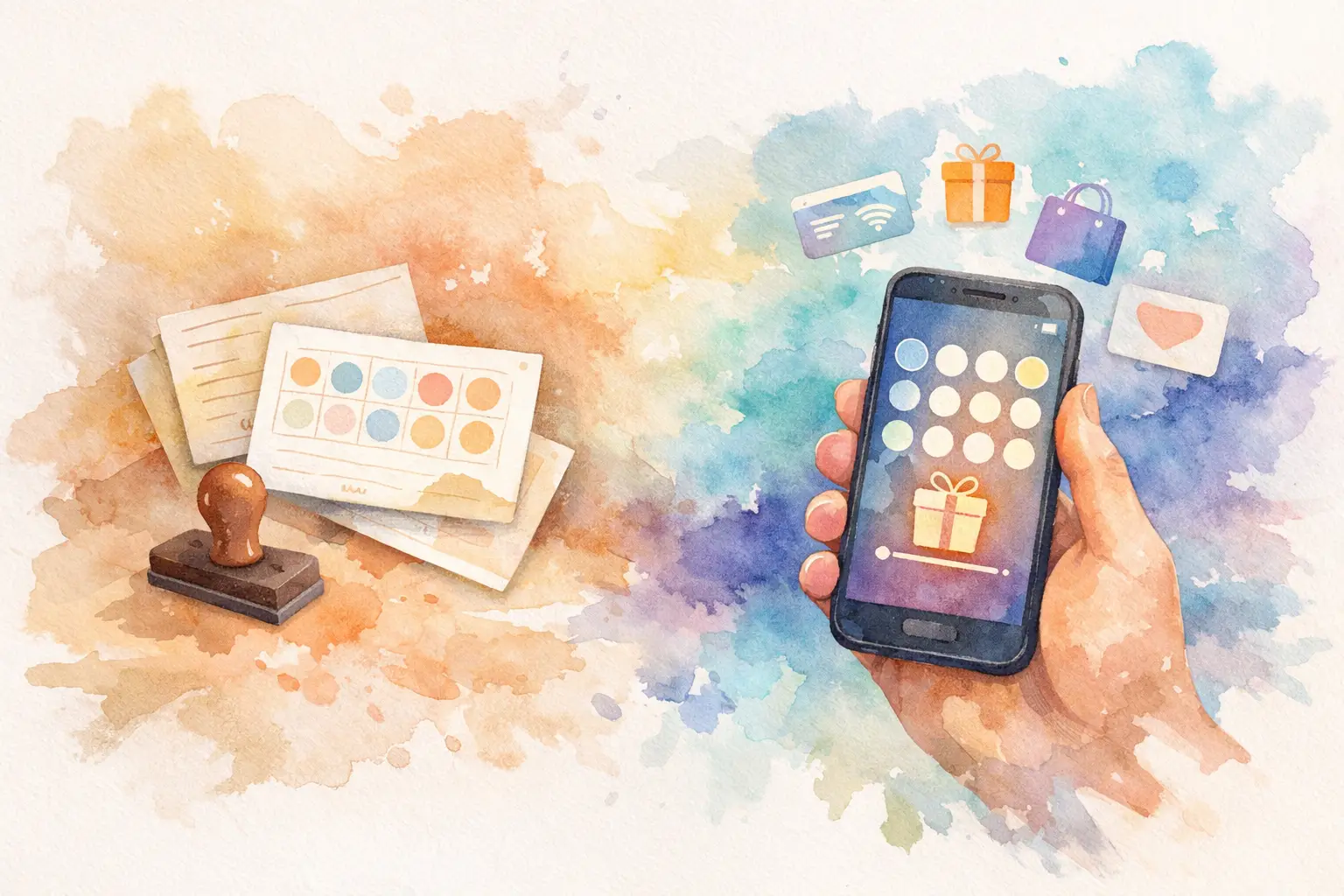
A customer reaches the counter with a coffee in one hand, a mobile phone in the other and no stamp card in sight. The card may be in a different wallet, washed in a jacket pocket or simply forgotten. That is the everyday reason so many local businesses are learning how to replace paper loyalty cards with a digital alternative.
Paper cards are familiar and inexpensive to print, but they leave too much repeat revenue to chance. A digital loyalty programme keeps the reward with the customer, gives your team a quicker way to issue stamps and gives your business a reason to reconnect between visits.
Why paper cards stop working as you grow
A paper stamp card can be a good starting point. Customers understand it instantly: buy a certain number of coffees, cuts, meals or classes, then receive a reward. The problem is not the idea. It is the paper.
Cards get lost, damaged and left at home. Staff may forget to stamp them during a busy rush, or apply stamps inconsistently across shifts. More importantly, once a customer walks out with a paper card, you have no practical way to remind them about an upcoming reward, promote a quiet Tuesday offer or announce a new product.
For a single independent shop, that can mean missed return visits. For a growing brand or franchise, it also creates a consistency problem. Each location needs to run the same offer, train staff in the same process and protect the value of the reward. A digital programme makes this easier to manage without making the customer experience feel complicated.
How to replace paper loyalty cards without losing regulars
The best transition keeps the familiar parts of your existing scheme and removes the friction. Customers should still recognise the reward and understand how to earn it. The difference is that their progress now lives on their mobile phone rather than in a purse or wallet.
Start by defining the behaviour you want to encourage. A café may reward every eighth hot drink. A salon may offer a complimentary treatment upgrade after several appointments. A gym could reward regular attendance or referrals. Retailers may prefer a spend-based reward if purchase values vary widely.
Keep the first version simple. If customers need a lengthy explanation at the till, the programme is too complicated. One clear earning rule and one worthwhile reward will usually outperform a clever scheme with multiple tiers, exclusions and conditions.
Choose a mobile-first experience
Your replacement should be quick for both sides of the counter. Customers need a simple way to hold their card, see their stamps and access rewards. Staff need an equally simple way to issue a stamp, ideally in seconds, without searching for names, handling physical cards or asking customers to fill in forms.
A QR-code process works well because it is familiar and visible. The customer presents their unique code, a member of staff scans it, and the stamp is added. This creates a consistent routine that is easy to teach to new team members and easy to repeat during busy periods.
Not every customer will adopt digital immediately. That is normal. Keep paper cards available for a short transition period if your audience includes customers who are less comfortable with apps. Avoid running both systems indefinitely, though. It creates confusion, makes reporting harder and gives staff two processes to remember.
Move existing stamps fairly
One concern comes up repeatedly: what happens to customers who are already halfway to a paper-card reward? The answer should be generous and clear. Ask customers to bring in their existing card and transfer their earned stamps into the digital programme. Set a sensible deadline, such as four to eight weeks, so the change has a defined end point.
This is not just good customer service. It gives your regulars a reason to download the new app and begin using it straight away. For customers with a completed paper card, honour the reward and invite them to join digitally for the next one.
Put a simple message at the counter and train staff to say the same thing: “We’ve gone digital, so you won’t lose your card again. We can transfer your stamps today.” Clear, positive language prevents the change from sounding like an inconvenience.
Set rewards that protect your margin
Digital does not mean you need to give away more. It means you can make each reward more deliberate. Before launching, work out the real cost of your reward, the average value of a qualifying purchase and the number of visits it takes to earn.
A free coffee after eight paid coffees may be a strong retention tool for a café with healthy margins. A restaurant with higher costs may be better served by a free side, dessert or upgrade that feels valuable to the customer while keeping the promotion commercially sensible. Salons can use add-ons that introduce clients to services they may later buy at full price.
The right reward depends on your margins, frequency of visit and customer expectations. A reward that is too weak will not change behaviour. One that is too generous can train customers to wait for discounts. The goal is to create a reason for another visit, not to reduce the value of every visit.
Use bonus stamps carefully too. They are especially useful during quieter trading hours, new-product launches or seasonal campaigns. For example, a café could offer double stamps on weekday afternoons, while a salon could offer bonus stamps for booking a midweek appointment. You are not simply rewarding spend – you are shaping demand when it benefits the business.
Use the change to build customer contact
The greatest advantage of replacing paper loyalty cards is not the digital stamp itself. It is the ability to stay connected with customers who have chosen to engage with your brand.
A paper card cannot tell a customer that their reward is close. It cannot show a new menu item, a last-minute appointment slot or a weekend offer. A digital programme can support targeted updates, images, videos and special offers that bring your business back into view at the right moment.
Keep messages useful. Customers do not want daily promotions from every business they visit. Send an update when it gives them a genuine reason to return: a bonus-stamp day, a seasonal launch, a new location, a loyalty milestone or an offer relevant to their previous behaviour.
This is where a platform such as Loyalty Magnet can do more than replace a paper card. It combines branded digital loyalty cards with direct mobile marketing, allowing local businesses to reward regulars and create timely reasons for them to come back.
Make launch week visible and easy
A quiet switch will produce quiet results. Treat the first week as a customer campaign, not an administrative task. Place clear signs at the till, mention the new programme when customers pay and give your team a short script that focuses on the benefit: no more lost cards, rewards always on their mobile phone and occasional member-only offers.
Your staff matter more than posters. If they understand how to scan, issue stamps and explain the reward in one sentence, adoption will build quickly. Give everyone a chance to try the process before launch, including part-time colleagues and managers who work at different sites.
For multi-location businesses, decide whether stamps and rewards work across every branch. Customers often expect flexibility, particularly with cafés, salons and gyms. A single programme across locations can make the brand feel more convenient, while location-specific offers can still help each site meet its own trading goals.
Measure what changes after the switch
Printing fewer cards is a small saving. The real measure is whether customers return more often and spend more over time. Watch sign-ups, active members, stamps issued, rewards redeemed and the gap between visits. Compare these figures with the weeks before launch, rather than relying on a single busy weekend.
Redemption is not a failure. It is evidence that people are engaging. If customers collect stamps but rarely redeem rewards, check whether the reward is unclear, too difficult to claim or not appealing enough. If few customers collect stamps, look first at staff adoption and how visibly the programme is promoted.
Review your offer after the first month. You may find that a smaller reward earned sooner produces better repeat visits, or that a bonus-stamp campaign fills a normally quiet period. Digital loyalty gives you room to test and improve without reprinting thousands of cards.
Paper cards ask customers to remember your business. A well-run digital programme gives them a reason to remember, a reward worth returning for and a simple route back through your door. Start with a clear offer, make joining effortless and let every scan move a casual customer closer to becoming a regular.
Join businesses increasing repeat customers with digital loyalty cards